Back in business
by Robert Mitchell
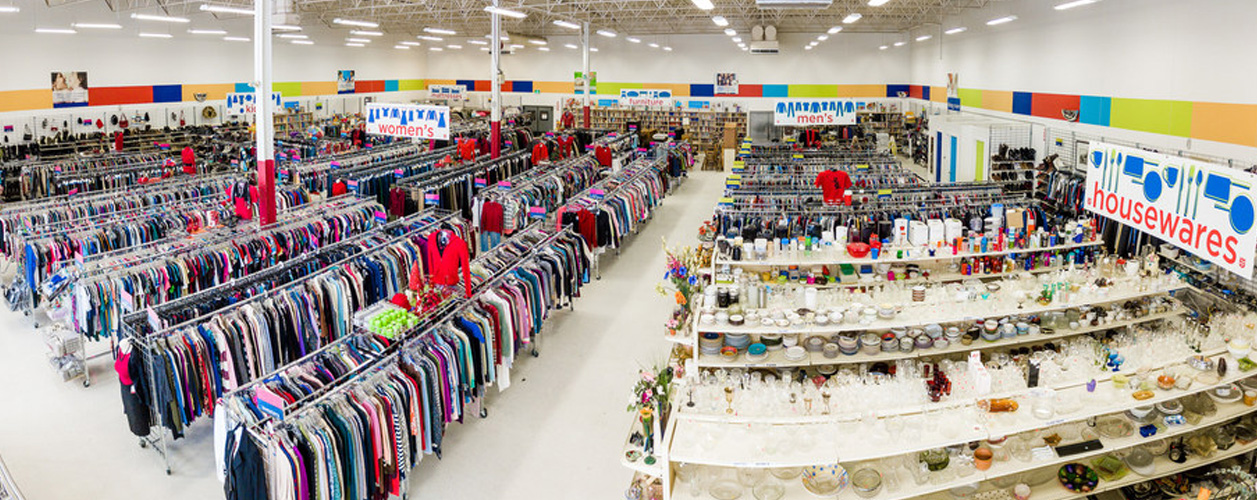
Ohio’s six Adult Rehabilitation Centers (ARCs) and their accompanying Family Stores reopened the week of May 11, albeit slowly and under the safety precautions of the “new normal.”
The ARCs and stores, which fund the ARC program through their sales, had been closed for nearly two months due to COVID-19. These ARCs and stores in and near Cleveland, Akron, Toledo, Columbus, Dayton, and Cincinnati were among the first to open in the Eastern Territory and will likely serve as a blueprint when other such ARCs and stores reopen across the country.
Before reopening, ARC officials installed plexiglass shields at each store to protect cashiers and customers. Regular sanitizing and cleaning of shopping carts, counters, and other areas are now a high priority.
Employees who were called back to work, now come and go in phases, wear face masks and plastic gloves, and are issued plenty of hand sanitizer.
Customers are asked to social distance and wear face masks, though some complain about the coverings. Hand sanitation stations are available in each store.
Despite reduced hours (10 a.m. to 5 p.m.) and only being open five days a week (Tuesday to Saturday), ARC officials said business was brisk in the early days of reopening. Customers with a pent-up desire for normalcy were happy to be out of their homes and shopping again.
David Deitrick, administrator for business at the Columbus ARC, said he had lines of would-be shoppers outside some of his five stores even when they were closed due to the pandemic.
“People were kind of excited,” he said. “They wanted us to be open.
“Our sales have actually been pretty steady. We’re kind of back where we were before, so we really haven’t lost much. It seems like we’ve had more customers coming out, probably because they’re so excited to shop again. People are ready to shop. They want to get in and spend their money.”
Captain Kenneth Cleveland, administrator for business at the Cincinnati ARC, echoed the sentiment about anxious shoppers.
“Business has been steady so far,” he said. “When I pulled into the parking lot of our center—our store is attached to our center—on the first day, we had a lot of people outside ready to get into the store.”
Cleveland, who oversees three stores in Cincinnati and two in Lexington, Ky., said sales continued to do “pretty well” in the week after a May 12 soft opening. A 50-percent-off sale on everything but furniture helped.
“A lot of people were happy to see that we were opened back up,” he said. “We had a lot of people who just wanted to get out of the house and were happy to spend some money in our stores.”
Envoy Mike Price, the administrator for business at the Toledo ARC, told a similar story. His four stores were “very cautious” as they reopened but did well financially with 490 customers on the first day.
“We did amazingly well,” Price said. “The customers came back with a lot of excitement and it just went really well all week. Now I’m in the process of calling everybody back.
“It’s going better than we expected. We’re just rolling along.”
There were some drawbacks to the conditions for reopening, such as the socially distancing rule requiring only two customers per 1,000 square feet.
Major Van Wirth, the administrator for business at the Cleveland ARC, said he posted employees outside to control the number of people in the store at any one time.
“It wouldn’t have been a stretch to have 50, 60, 70 people in one of my stores,” he said. “Now I can have just 44. That cuts it down and that means the income is going to get cut down. These are the challenges we’re facing to keep the program afloat.”
Wirth said some stores that were open 10 hours a day before COVID-19 are now down to eight hours. They also are only open five days a week instead of six, but he was slowly calling employees back to work.
“We’ve not done bad considering the hours we’ve been open,” he said. “Our customer counts have been pretty steady from everything I’ve seen. We’re getting there. It’s a slow, sure, and steady road.”
Donations have been “staggeringly amazing,” Wirth said.
The three stores run by the Dayton ARC are operating as “one-way” locations, said Major Patricia Kurtz, administrator for business.
“You come in a door and there are green arrows to keep traffic going in one direction,” Kurtz said.
“So far it’s been going well,” she added. “We’ve had good sales and a good customer count. When we opened, our stores all had a line of people waiting to get in to shop, so that was encouraging.”
Kurtz is in the process of calling employees back to work as business improves.
“Things are going well, and we’re back to what they call the new normal,” she said.
Major Joe Irvine, administrator for business at the Akron ARC, said he has received great feedback as his four stores reopened.
“The customers and staff are happy that we’re back and open,” he said. “The numbers were a little better than I expected. Then they dropped off the third day. A lot of that was just people being allowed to get out and that sort of thing. Over time, it will come back fully. It’s not there yet.”
During COVID-19, most ARCs locked down and suspended the admission of new beneficiaries. Now as centers reopen, they are trickling in under new conditions.
Captain Cleveland said the ARC in Cincinnati has been responding slowly and methodically. New beneficiaries not coming from a hospital or other rehab facility must be quarantined for two weeks and show no signs of a temperature or other COVID-19 symptoms. That is the rule at all ARCs.
“It’s a very slow process,” Cleveland said. “We make sure there are no symptoms or anything else that would impact anyone else.
Once that’s been established, then they’re able to come and participate in the work therapy and be a part of the house, but we have to take those precautions.”
Wirth agreed, saying the Cleveland ARC is also being careful as far as new beneficiaries.
“Everything’s on a slow, carefully measured, guarded pace,” he said.
Kurtz said her ARC in Dayton saw an abundance of donations to pick up as Ohio reopened, meaning some people did a little spring cleaning while quarantined.
“Getting those things processed has been difficult, but it’s a good problem to have,” she said.
Irvine said he will head into retirement in a few years with fond memories of the “positive in-house dynamic” while beneficiaries were locked down in his ARC in Akron.
“We’ve been able to dig a little deeper into the scriptures,” he said. “Everyone just began to pull together. They’ve grown closer to the Lord because of the intimacy. There was just a sweet, sweet spirit in the house.”
Irvine said some beneficiaries left during the lockdown, but those who stayed “really became a family.” While his sermons usually centered on sickness, disease, and addiction, during the quarantine, he now talks more about the necessity of church and fellowship.
“I’m preaching differently,” he said. “I find myself talking more in-depth out of the book of Acts about church and church growth and the evolution of all of that. I’m seeing Christian maturity happen before my eyes in a group that you would not likely suspect that to happen.”
About the Author: Robert Mitchell