Where Trust Blooms
by Hugo Bravo
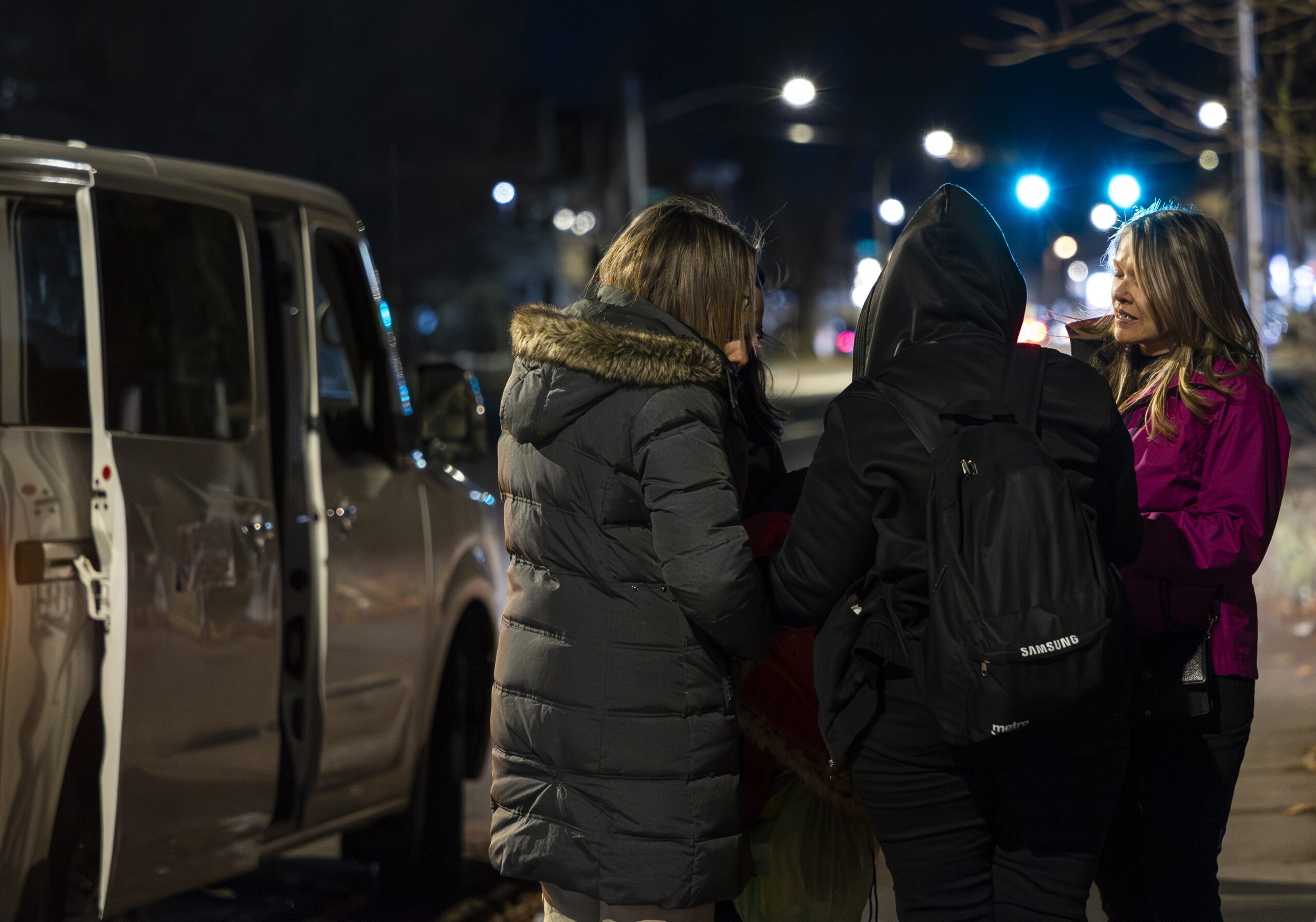
Susan Noviello (right) is the anti–human trafficking program coordinator for The Bloom Initiative, a Salvation Army ministry in Hartford, Connecticut. During street outreach, team members and volunteers offer help and prayers to connect and build trust. (Photo/Lu Lu Rivera)
The Bloom Initiative, based out of The Salvation Army Hartford Citadel in Connecticut, walks alongside victims of human trafficking.
Susan Noviello will never forget meeting with a survivor of human trafficking who suddenly lifted her shirt and revealed a scarred back. Carved into her skin was one word: “worthless.”
“That day, I couldn’t go home,” says Noviello, the anti–human trafficking program coordinator for The Bloom Initiative, a Salvation Army ministry based in Hartford, Connecticut. “I went to a river nearby just to think about this girl and how she had been forced to wear this on herself.”
Like countless men and women who have lived through the horrors of human trafficking, this survivor had once trusted someone only to be manipulated and exploited by him or her. In Connecticut, familial trafficking is common, Noviello explains. Boyfriends or relatives, desperate for money or drugs, betray the very people who trust them most.
“When the people you trust do that to you, it ruins your life,” says Noviello. “How do you trust anyone again?”
The Bloom Initiative is working to rebuild that trust for survivors of human trafficking through prevention and awareness education, case management, and traditional Salvation Army street outreach.
Day and night
At 14 years old, Meryl* was sexually assaulted by her grandmother’s boyfriend. Upon learning what had happened, Meryl’s grandmother took her boyfriend’s side, physically abusing Meryl as punishment. Meryl, who was living in a home filled with siblings, remembers going out for a walk to clear her head. That’s when a man lured her into a car, locked the door, and said she wasn’t leaving. The trafficker took her to a hotel, where there were other girls waiting. They were split into two groups, one with girls Meryl’s age, and another with older women. For almost two years, Meryl was trafficked in the north end of Hartford.
With a mix of insurance companies, manufacturing plants, and finance firms, Hartford was once considered one of the wealthiest places in the United States. But since the 1990s, Hartford’s population has decreased as its poverty numbers have increased. It’s now rare to see someone who lives in Hartford working in the city’s office buildings, which are surrounded by urban housing and streets known for drug use and human trafficking.
Every other Friday, members of The Bloom Initiative park the corps van on Hartford’s streets, handing out food, hygiene products, and clothing. Sometimes, a city harm reduction vehicle accompanies them with supplies they can’t provide, like medicine and clean needles.

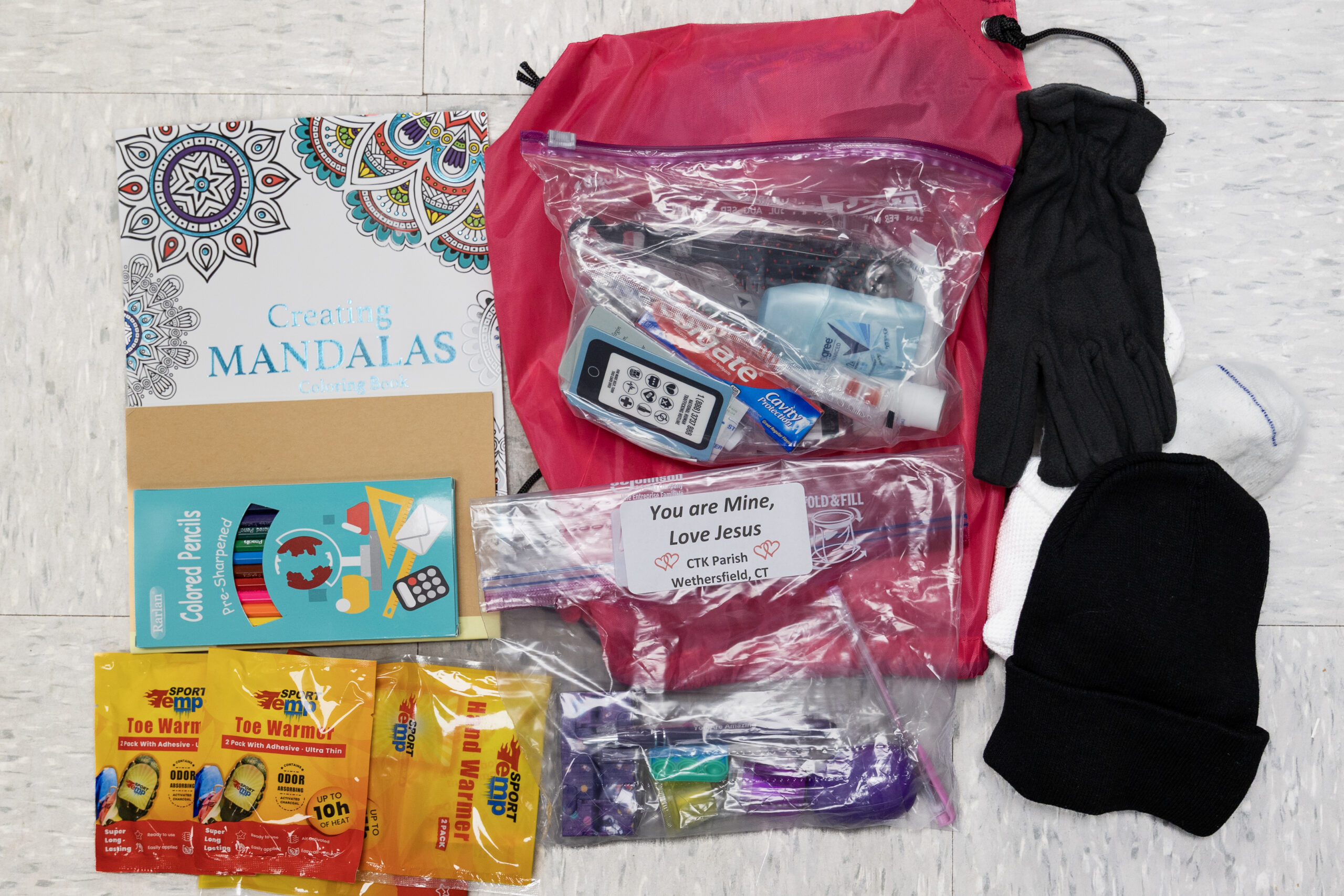
Bags are prepared for The Bloom Initiative’s nighttime street outreach. (Photos/Lu Lu Rivera)
Daytime is when they connect the best, according to Hannah Lespier, anti–human trafficking support specialist for The Bloom Initiative.
“We can sit down and talk to the women,” says Lespier. “We eat with them, learn about them, and they can look through everything we have and take what they need.”
Just a mile away from Hartford Citadel, there’s an area where trafficking activity spikes at night. Every other Thursday, team members drive around the neighborhood looking to identify possible victims. They give out food, coats in the wintertime, and contact information where people can seek further help.
“It’s the same population,” says Noviello. “We just reach them at different times.”
Walking in a desert
After fighting back during a violent altercation with her trafficker inside a hotel room, a bloodied Meryl ran down to the reception desk. Upon seeing her injuries, the employees called the police. The trafficking ring was exposed and broken up. Because of his criminal record, Meryl’s trafficker received an extended prison sentence, which would keep him in jail for life. At the hospital, Meryl’s face was so swollen that her family did not recognize her. The police who broke up the trafficking ring put Meryl in contact with The Salvation Army Bloom Initiative.
Most of the survivors that The Bloom Initiative sees come from middle-class families and have been trafficked since childhood or their teen years. The caseworkers dive deeper into their past, their current situation, and a path forward.
Even when survivors are no longer under a trafficker’s control, the trauma doesn’t just disappear. It lingers, making it hard for them to focus on a job or return to school.
“They only know how to do one thing,” says Noviello, “and they feel that’s their only worth.”
Helping survivors is never simple. Years of manipulation have shaped how they see the world, and sometimes they repeat those patterns and manipulate others. Noviello says the key is knowing when to give grace and when to set strict boundaries. Progress isn’t linear.
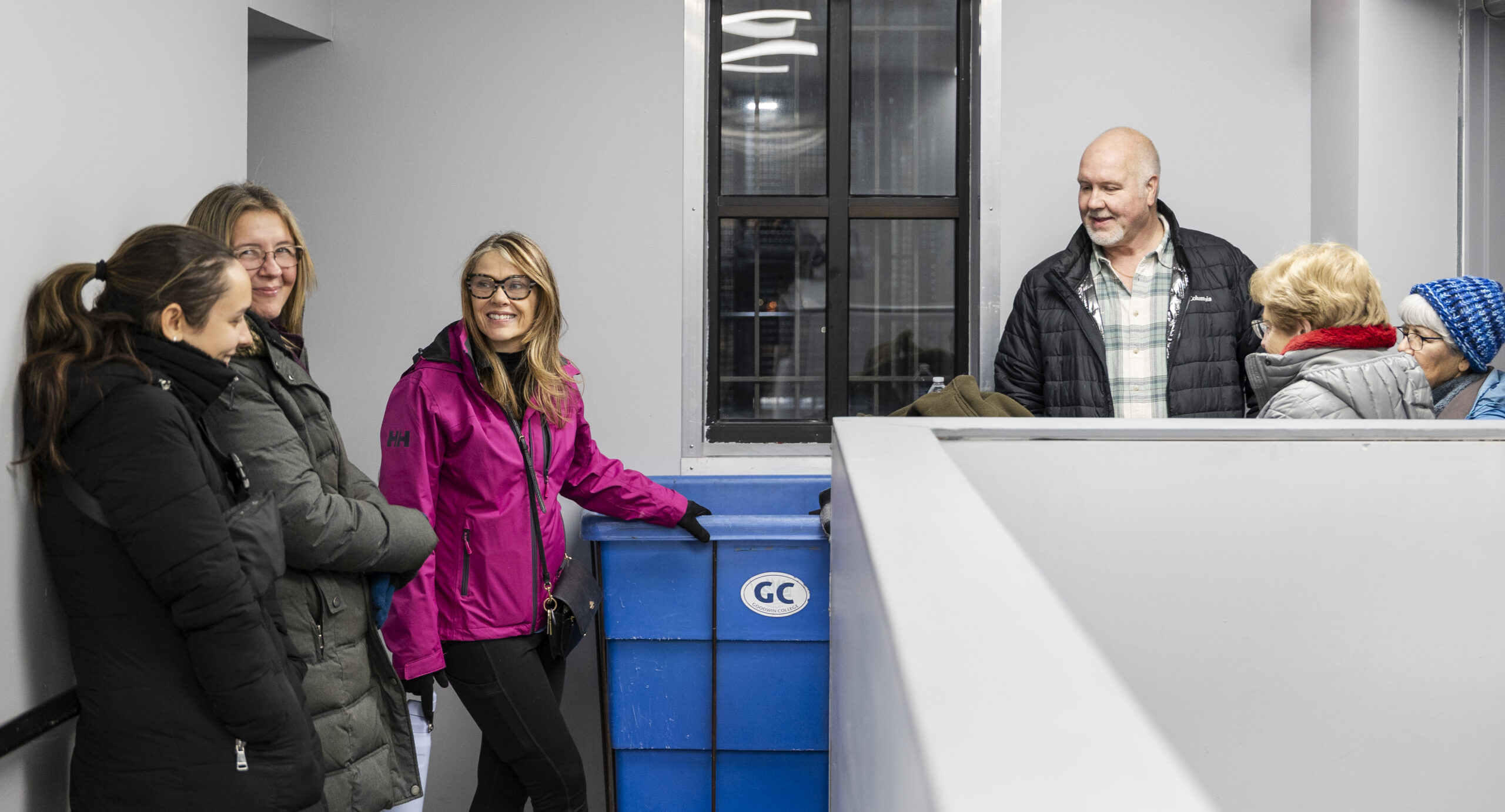
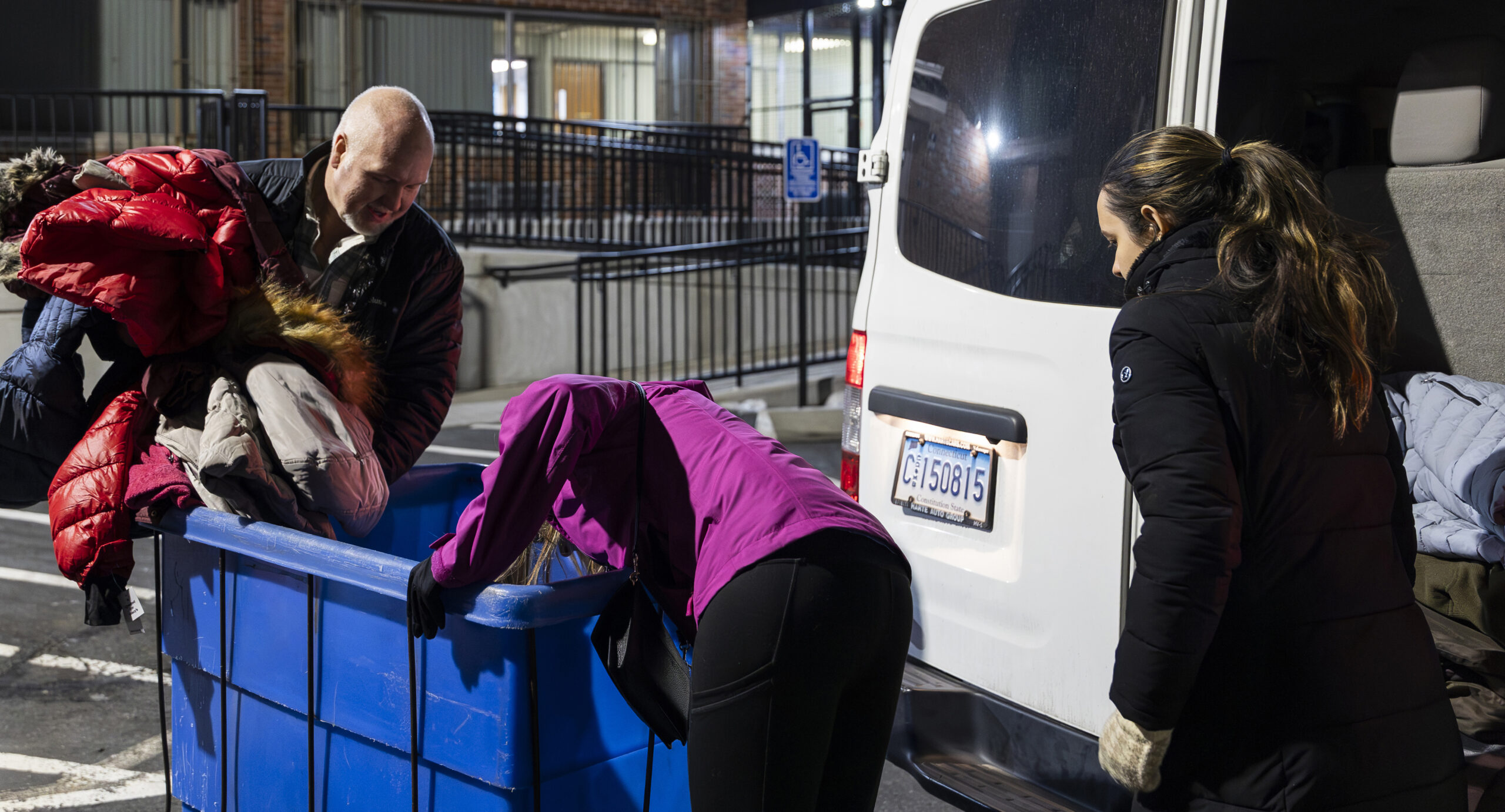
From left: Hannah Lespier and her mother, Bonnie; Susan Noviello; and volunteers Jeff Haines, Nancy Kiely, and Jean Mazzarella. In the winter months, The Bloom Initiative brings coats to give away during street outreach. (Photos/Lu Lu Rivera)
“When you walk alongside someone who has been trafficked, you don’t walk in a straight line,” says Lespier. “We understand that because Salvation Army ministry is not a straight line either. Other programs are very rigid and set in their process. Here, sometimes you need to improvise.”
While manipulation and power struggles may cause other programs to give up on people, Noviello says, she believes that there are ways to build trust, on both sides.
“It’s almost like Moses walking in the desert,” says Noviello. “Everything tells you to stop, but you have faith that God will provide and you keep going, waiting for the water to come out of the rock.”
And when breakthroughs come, they make every step worthwhile. Noviello says they’re so grateful not to have given up on that individual. Giving up would mean another person failed by the community instead of being embraced by it.
“We’ve taken them much further by walking alongside them,” she says. “These are women who have felt hopeless. Maybe they’re not quite self-sustaining yet, but they no longer look or feel hopeless. They can see the possibilities in front of them.”
The fight of her life
Today, Meryl is in her 20s, working toward her GED diploma and driver’s license. A devoted mother to a young child with special needs, she hopes to work in real estate. She has organized a support group with other women who have similar experiences. She stays in contact with The Bloom Initiative and calls upon them when triggers set in. Years after escaping, she still shares new details about her time being trafficked. Through her own hard-won strength, with help from The Bloom Initiative, Meryl is looking toward a future that was unimaginable at one point.
When women face violence from a trafficker, Noviello says, their reactions typically fall into one of four categories: fight, flight, freeze, or “fawn.” Most often, they freeze out of fear, or fawn, trying to please their attacker to avoid being hurt more.
It’s very rare that someone in that situation responds with fight. But when Meryl did, she not only saved herself but all the other women who were also held captive.
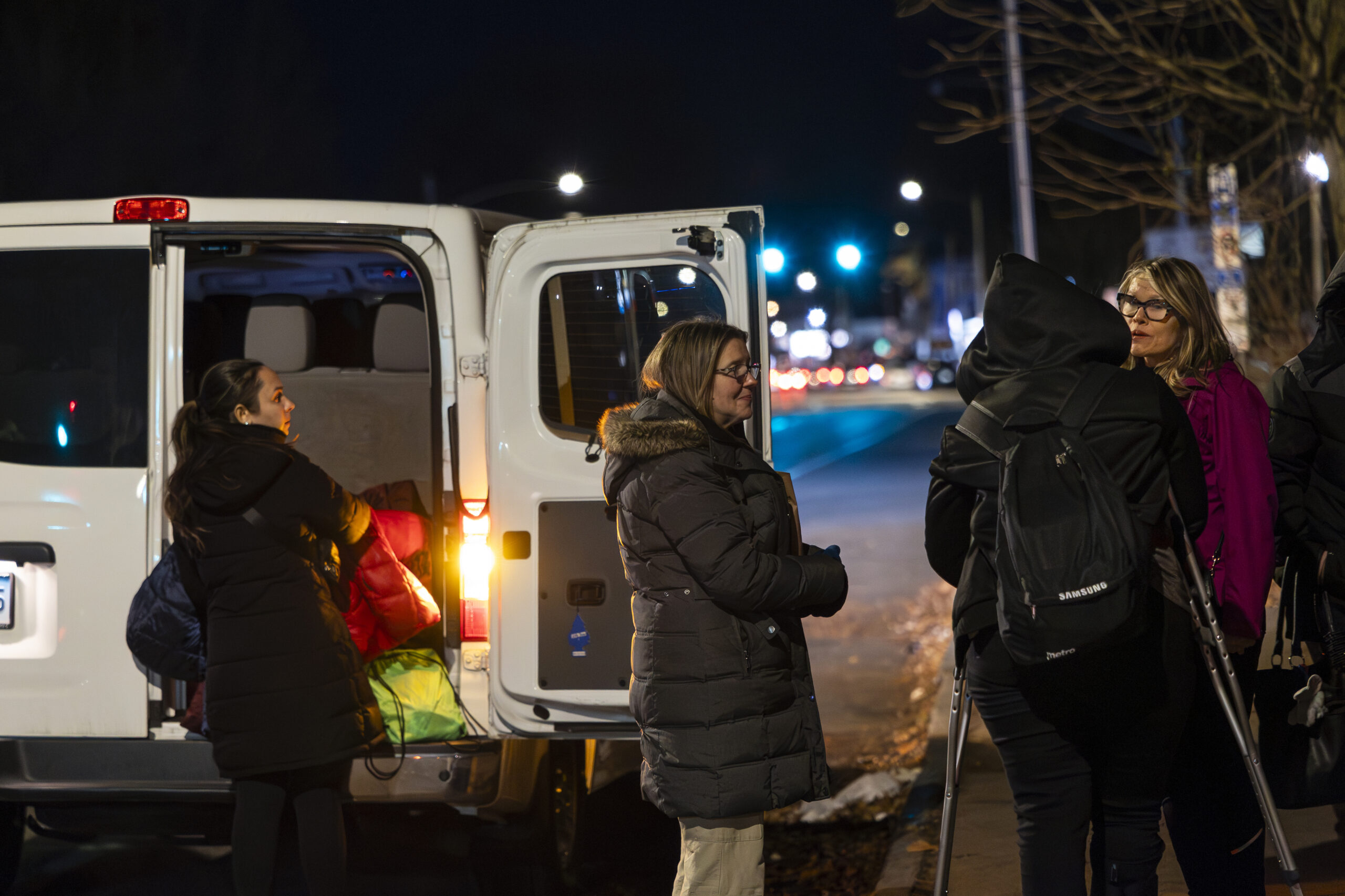
As in one-on-one casework, The Bloom Initiative’s goal during street outreach is to develop trust among the women they help. (Photo/Lu Lu Rivera)
“The strongest light shines out just when it is the darkest and bleakest,” says Noviello.
Meryl is now trusting Noviello and The Bloom Initiative in a new way.
Shortly after meeting the survivor whose back had been scarred with letters, Noviello enrolled in classes to learn scar camouflage tattooing. This type of tattooing masks scars from cuts, injuries, or burns with a person’s skin tone. It creates a more permanent, natural-looking solution than makeup.
Meryl has agreed to allow Noviello to treat a scar on her face from her last encounter with her trafficker. Noviello hopes she can help more women who’ve been in situations like Meryl’s and grow a new ministry within The Bloom Initiative.
“I find it a privilege to walk with someone who’s come out of that, to build that connection with them and be seen as a source of trust,” says Noviello. “I honor that trust and nurture it, because it did not come easy.”
*Name has been changed.
About the Author: Hugo Bravo