From anxiety to outrage to hope – 001
by Warren L. Maye
A resurgence of the COVID–19 outbreak now would add yet another layer of complexity to an already exploding scenario for 2020. In the midst of massive and global protest in reaction to the death of former Salvation Army employee George Floyd, anxiety over the pandemic has turned to outrage against injustice; thousands of shouting voices and marching feet have trampled mandates for social distancing. Although the media has turned its attention on the drama unfolding in city streets, doctors and other health care workers continue to wage a desperate struggle to save lives in our nation’s hospitals. This is the first installment of five stories that will put the spotlight back on Salvationists who are doing this essential work.
Retired doctor returns to fight COVID–19
After 39 years of practicing medicine in the United States and on the mission field, Salvationist, Dr. Russ Raymond thought he had seen it all and was ready to move on to retirement and the next chapter of life. Then one day, he learned of the COVID–19 pandemic and its potential to overwhelm hospitals and bring death to untold numbers of people.
Today at age 67, Dr. Raymond feels some regret in knowing that he’s too much at risk to get involved in the biggest medical crisis of our time. Nonetheless, he remains close by. “I retired in December from my practice of 39 years and came back in a contract position at the Cleveland Clinic in cardiology for just two days a week,” he says. “So, in one sense, I feel like, if I had known this was coming, I would not have retired. On the other hand, maybe this is God’s way of protecting me and my family from less exposure to COVID–19.”
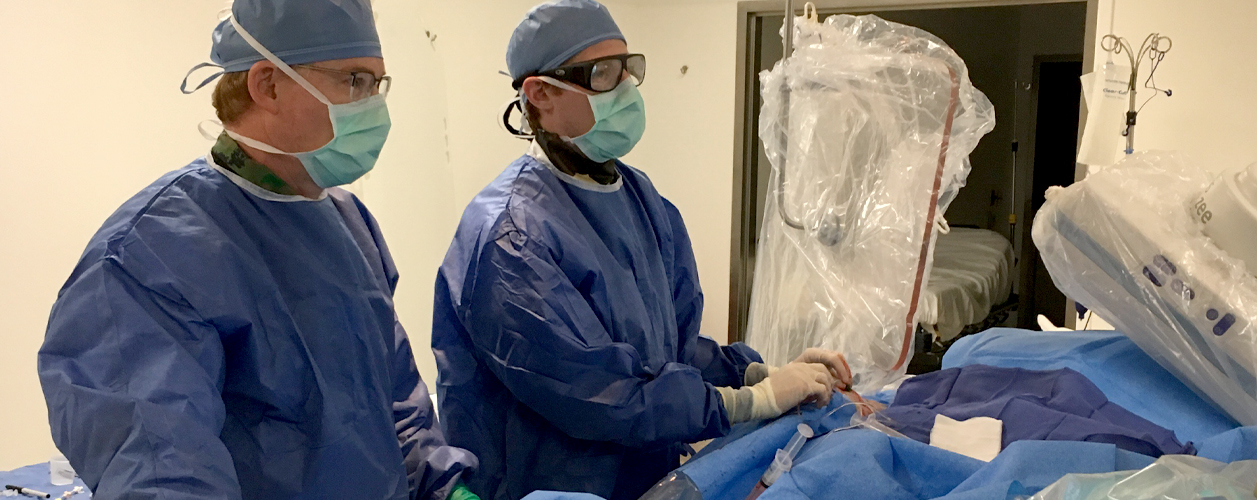
As an interventional cardiologist, Raymond’s closest contact to COVID–19 patients is in the catheterization laboratory during heart catheterization or stent procedures. “My partners who are more active at this point, have taken care of a number of COVID patients,” says the graduate of the Chicago College of Osteopathic Medicine.
Stress and the heart
The cause of death for many of the COVID–19 patients has been cardiac arrest, Raymond says. “Respiratory–wise, the body actually has a reaction to the virus where the lungs swell with fluid and oxygen and carbon dioxide cannot exchange. Additionally, the virus may affect the heart muscle, making it grow weaker.
“Doctors cannot oxygenate patients through their own lungs, so they bypass the lungs with what we call ECMO (Extracorporeal Membrane Oxygenation machine). The blood goes through the oxygenator and then back into the right side of the heart,” says Raymond.
Despite having a grim prognosis, ECMOs, ventilators, and respirators have gotten hundreds of patients through the tough times. “You see, the greater the viral load, the more likely is the chance of demise,” says Raymond.
“The ventilators can at least get the patient through that critical time. Then the body takes care of the virus and the patient can be extubated, and the tube can come out.”
Ventilators have kept some patients alive for weeks, but the virus eventually takes over and then they die. “A lot of them are dying from cardiac failure and not just lung failure. Underlying conditions, especially hypertension, seems to be one of the biggest risk factors, along with diabetes,” says Raymond.
Most of the patients at Cleveland Clinic are taken care of in a COVID–19 unit. The hospital has been on the frontlines in creating innovative ways that allow doctors such as Raymond to stay outside of the room and actually have little direct contact with the patient.
Knowing the Lord
“The ultimate terrible experience is when you lose a patient on the table during a catheterization procedure,” says Raymond. “Most of the deaths, which are never easy to face, will come during procedures when patients come in with heart attacks.
“I never like to lose a patient and I’ve lost a handful over these 39 years of practice. The hardest part, in addition to losing the patient is speaking with and consoling the families. I find that the families that have a strong faith in Jesus are far easier to deal with and come to understand what has happened to their loved one. It’s those that don’t know the Lord who are often the most difficult to deal with.
“Those are also the families that are most vulnerable to the gospel. So, I develop a relationship with these families as time goes on. That relationship can then lead to dealing with spiritual matters, which is so ironic.
Opportunity for ministry
Raymond says that people have various interpretations of what’s happening and how to respond to it, but as Christians, we’re called to run into such situations, rather than away from them. “It’s the reason why Christianity has blossomed during such times in history,” he says.
Raymond says The Salvation Army is well positioned to minister during these times. “I cannot think of an organization that combines a heart to God and a hand to man and is better poised to help others.
“When I go to Honduras every year and I take a medical team, my sidekick, my right–hand person, is Charlene Myers. Her dad, Major Richard Shaffstall, really started this mission trip. I texted her this morning and I asked, “Charlene, what verse comes to mind during this whole COVID–19 crisis?” Probably not 10 seconds later, I got back Colossians 3: 17.
“Whatever you do, whether in Word or in deed, do it all in the name of the Lord Jesus giving thanks to God and to the Father through Him.”
The photo that originally illustrated this article was placed in error and has been removed.
About the Author: Warren L. Maye