God Wasn’t Done With Me
by Guest Contributor
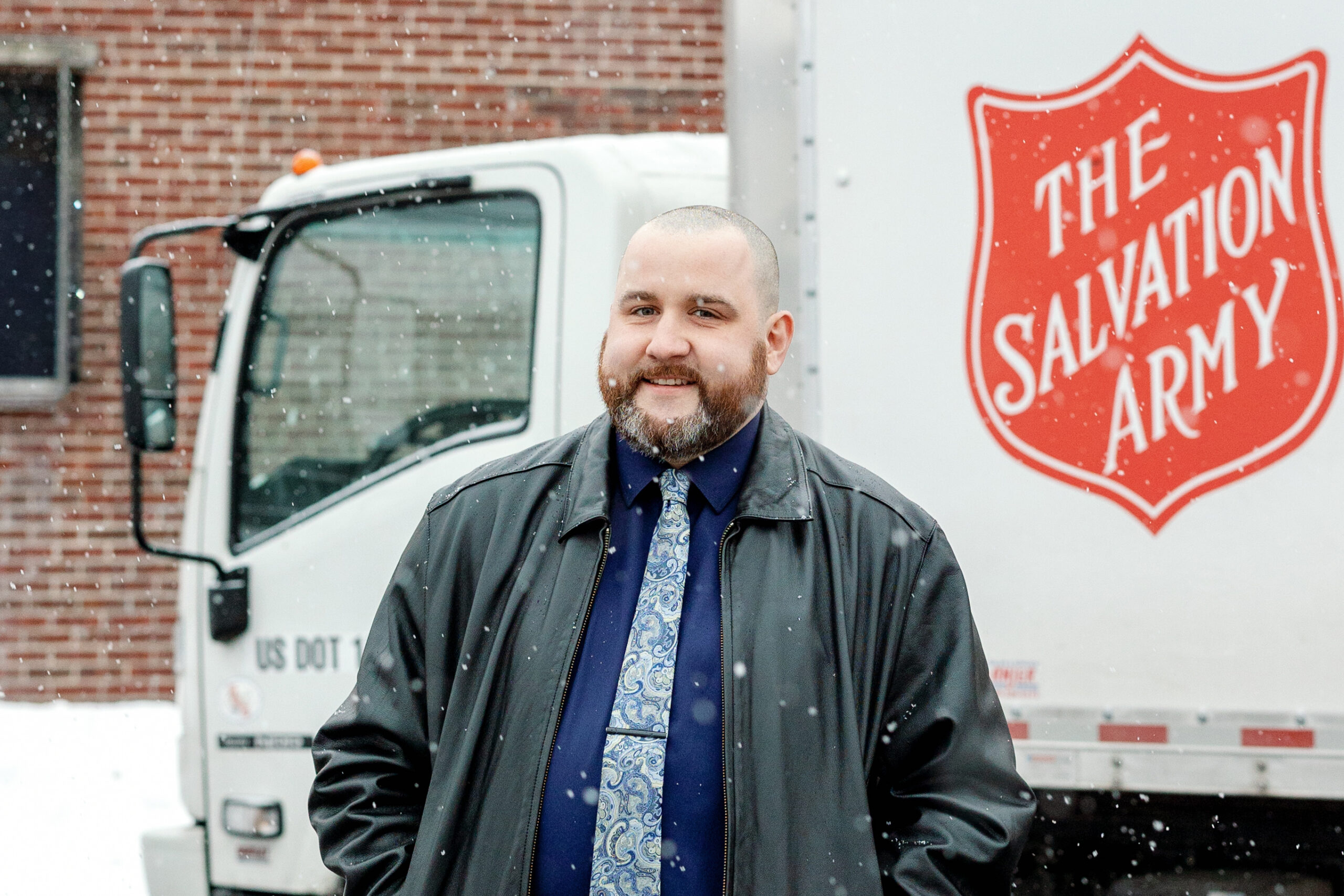
“The Salvation Army Adult Rehabilitation Center didn’t just give me my life back,” says Shawn Nenichka. “They taught me the right way to live it.” (Photo/Brooke Makena Photography)
by Shawn Nenichka, as told to Hugo Bravo
Shawn Nenichka, now business director for The Salvation Army Adult Rehabilitation Center in Scranton, Pennsylvania, struggled with alcohol and controlled substances beginning in his teens. After trying over a dozen rehabilitation programs, he found one that became a second home to him with The Salvation Army.
People sometimes have a fixed idea of what someone going through addiction or recovery is supposed to look like. They wonder how somebody could live with that addiction, knowing what it was doing to them. When I think about where I was and where I am now, I can say that addiction is the best thing that ever happened to me. Not because of the people I hurt, but because I wouldn’t be where I am now without having experienced addiction first.
I grew up in Swoyersville, Pennsylvania, in a home that never had any drugs or alcohol in it. In fact, my family has a long history of soldiership and service in The Salvation Army. My great-aunts Barbara, Ruth, and Josephine Wolfe were three of eight siblings who all grew up in the original Wilkes-Barre Citadel, playing tambourines, handing out War Cry magazines, making pastries, and working the kettles at Christmastime. Their family would cook giant pots of soup and invite anyone who was hungry into their home. Several family members considered the calling to officership, and a few of them pursued the calling and became officers. I grew up very familiar with the Army and its mission.
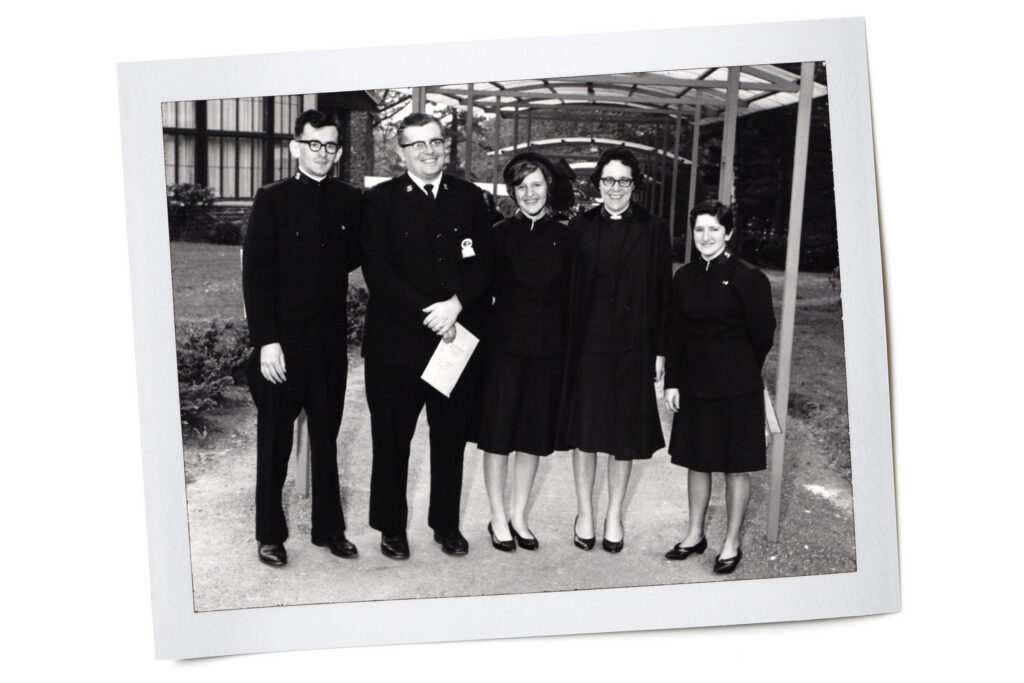
Service in The Salvation Army runs deep in Shawn Nenichka’s family. (Photo/Courtesy of Shawn Nenichka)
The fast lanes
When I was 13 years old, my father was offered a very good job in Fort Worth, Texas, and our family moved. I was already a shy, socially awkward teen, and to deal with the drastic change of environment, I began drinking and using drugs like marijuana and methamphetamine. Because I was homeschooled, I graduated at 16 and went to work managing a local bowling shop.
Bowling is popular in Texas. Schools have bowling teams that travel and compete. There were four large bowling alleys within 15 miles of our home. You could make a pretty good living by just being associated with bowling, and my older brother and I both managed bowling shops owned by a retired pro. At 16 years old, I bowled my first perfect game. I had the talent and connections for a career in professional bowling. I was sure that was where my life was heading.
While most young people my age were thinking about finals and prom, I was earning a sizable adult paycheck and fraternizing with bowlers much older than me. Drugs and alcohol made it easier to navigate circles that I should never have been part of in the first place. I wasn’t a kid sneaking out and trying cigarettes or beer for the first time with his friends. I was drinking, gambling, and doing things that no teen should be doing.
My parents had no real knowledge of how to help someone through addiction—much less a son who’d grown up way too fast. They set an ultimatum: Enter a sobriety program, or I would not be allowed to return home. It became a cycle. I’d finish the program, come back home, then go back to drinking.
By 17 years old, I had done 17 monthlong rehab programs. I wasn’t ready to change. I didn’t even really understand what the problem was with me doing what I was doing. But I had learned that the family of an alcohol abuser also suffers from his or her actions. I was stealing money from my parents, even as I knew that my mother had already picked out a casket for me, fearing the worst. I was done making her and my father suffer, and in the spring of 2015, after my latest stay in a sober house, I made the decision to return to Pennsylvania and stay with family in Wilkes-Barre.
Unfortunately, despite my new surroundings, my addiction continued, and once again, I was in and out of rehab programs until my insurance refused to pay for another stay. I checked myself into a hospital and was put in a lockdown crisis unit, for fear that I would harm myself. That was where someone from The Salvation Army came to talk to me. I agreed to leave the hospital and was accepted into the Adult Rehabilitation Center (ARC) in Wilkes-Barre.
A way that works
Some of the lessons at the ARC program were familiar from my past attempts at controlling my addiction. But something felt different this time. I wasn’t being told what I needed to do. Instead, I was being shown what had worked for others like me before, whether it was books, meetings, or prayer. I also met Salvation Army officers who had known my family and shared memories of babysitting me as I played with their own grandchildren. These people made the ARC feel like a homecoming after being away for so long. This was where I was supposed to be.
When my 30th day at the ARC came, I thought about how that was the point where other programs sent me home, whether I was ready to leave or not. Clearly that had not worked for me. Knowing that I was only getting started and had five months to go was life-changing.
I know that some beneficiaries struggle with the rules and structure of the ARC. In my time there, I didn’t break a single rule. It wasn’t about pushing myself to behave or stay clean. But for the first time, everything clicked. At 23 years old, having an addiction for almost half my life, I was done seeing it as something to live with. I was finally ready to start my recovery.
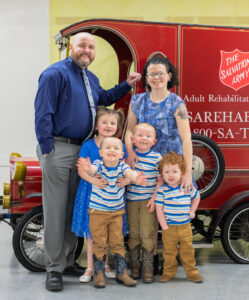
Shawn Nenichka with his wife, Melissa, and their children Shawn Jr., Rhett, Serenity, and Ryker.
(Photo/Brooke Makena Photography)
Family decisions
Years ago, I thought about one day working as part of a program like those I’d been through. I never had the opportunity until now. After graduating from the ARC, I stayed as the Wilkes-Barre resident manager. I also enrolled in Luzerne County Community College to study social work. It had always interested me, but even more now after my experience at the ARC. Despite being homeschooled, I loved being inside classrooms. I was honest with my teachers about my past, and they took me under their wing, helping me when I struggled with assignments. I’m still in touch with many of them today.
I also got married to my wife, Melissa. We met soon after I’d moved back to Wilkes-Barre. Together, we made the decision to become Salvation Army soldiers. I wanted to trace the trajectory my life could have followed had I never left Pennsylvania. I’d like to think that I would have continued that family tradition of soldiership and service at The Salvation Army.
Our family grew, and I began working part-time jobs along with my position as resident manager. After COVID-19 lockdowns and maternity leave, Melissa did not go back to work, so I became the main earner in our home. Between three jobs, studying to get my degree, and still working on my recovery, I was never home. I was being stretched thin but still felt I could handle it well. The ARC had taught me how to manage the type of stress that could have put me back on my old ways. I could go through anything and never feel overwhelmed.
But my family needed me home, and I needed a job that would pay enough without requiring me to work more than 40 hours a week. Children don’t necessarily see the difference between their dad working hard at his job or him being out there running the streets—but they know when he’s not around for them.
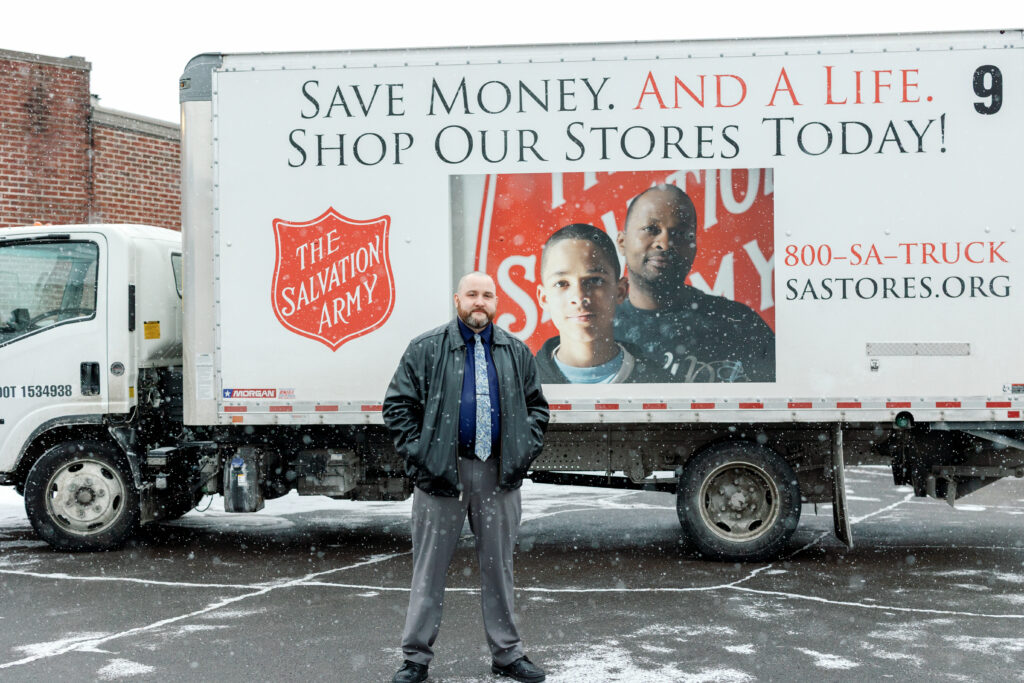
“The ARC taught me how to manage stress,” says Shawn Nenichka, now business director for The Salvation Army Adult Rehabilitation Center in Scranton, Pennsylvania. “I was taught that I can go through anything. I don’t have to hold it all in until I’m overwhelmed.” (Photo/Brooke Makena Photography)
I resigned from the Wilkes-Barre ARC and accepted a full-time position at the college as a certified recovery and intake specialist with AREI (AllOne Recovery Educational Institute) and KEYS (Keystone Education Yields Success), two programs focused on helping others in recovery.
The ARC had been my workplace for eight years by then, but this was part of being an adult and a father. I had already been saved after going through so much, and I knew it would be OK.
God isn’t done with me, I said to myself, and He isn’t going to leave me now.
Six months later, a position for business director with the Scranton ARC became available. I wasn’t done with The Salvation Army either.
A place like home
The Scranton ARC is made up of six stores, living quarters, a drive-thru donation center, and 200 employees. The business director oversees all of it, making sure the lights stay on in the buildings, and the stores are selling and receiving the right products. I may not be working one-on-one with the beneficiaries like I was before, but I’m making an impact on a different level. I’m making sure that the mission of the ARC keeps going, and its doors stay open so more men can have the same experience that I did, from addiction to recovery.
Speaking of recovery, my own is enhanced knowing that I’m not working in a place where nobody would be able to catch the signs of a relapse. If I’m doing something that I shouldn’t be doing, I’m still surrounded by people going through the same journey. The chances are very high someone would catch on, pull me aside, and make sure that I’m OK. Recovery never ends, and The Salvation Army’s support doesn’t either.
Even as I work for Scranton, the Wilkes-Barre ARC is still my community. I’m secretary for the ARC alumni association. We feed the community and share about the work of The Salvation Army. When talking to others, I can still be that socially awkward kid from Fort Worth. Except when I’m telling the story of my journey: a child of Salvationist parents from Pennsylvania who ended up in Texas, then returned home carrying an addiction that turned into recovery when I realized I didn’t need just a program; I needed a place that felt like home.
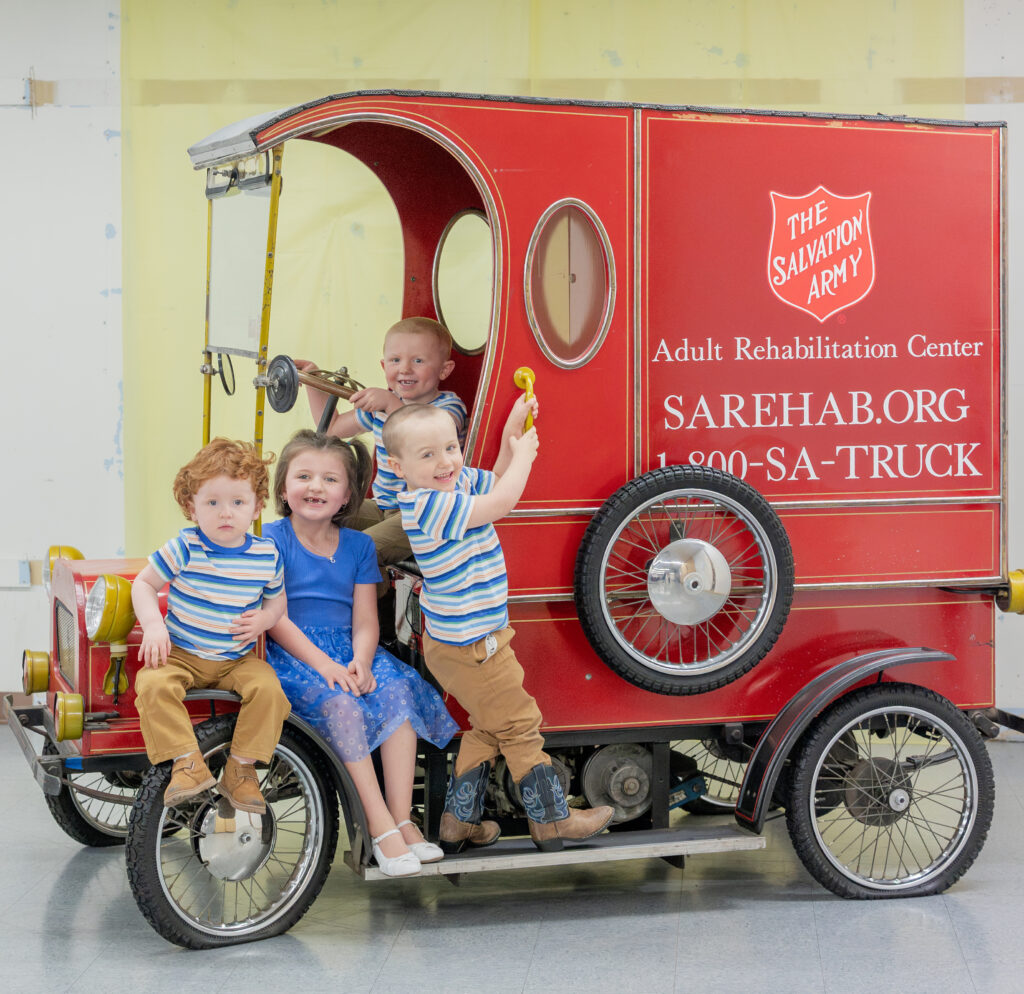
“I’m grateful to say that my kids have never seen me under the influence,” says Shawn Nenichka.
“When the time is right, they’ll have the knowledge of what their father went through.” (Photo/Brooke Makena Photography)
Together, my wife and I are raising four beautiful children under age 6. Later this year I hope to celebrate 11 years of continued recovery. I managed to graduate with my bachelor’s degree with the highest GPA of the class, and I received several other awards when I walked across the stage. God has given me an amazing job opportunity, a beautiful family, and an undergraduate degree. He has surrounded me with people who truly care about me. I am looking forward to the journey God has set before me and hoping to impact as many people as possible along the way, just as others have done for me.
Back when I was still drinking, I never would have imagined that I’d get to be a part of the same ministry that saved me. I wouldn’t want to be anywhere else.
About the Author: Guest Contributor