The Centennial Memorial Temple at 95
by Guest Contributor
It’s been the center of nearly a century of meetings and mission.
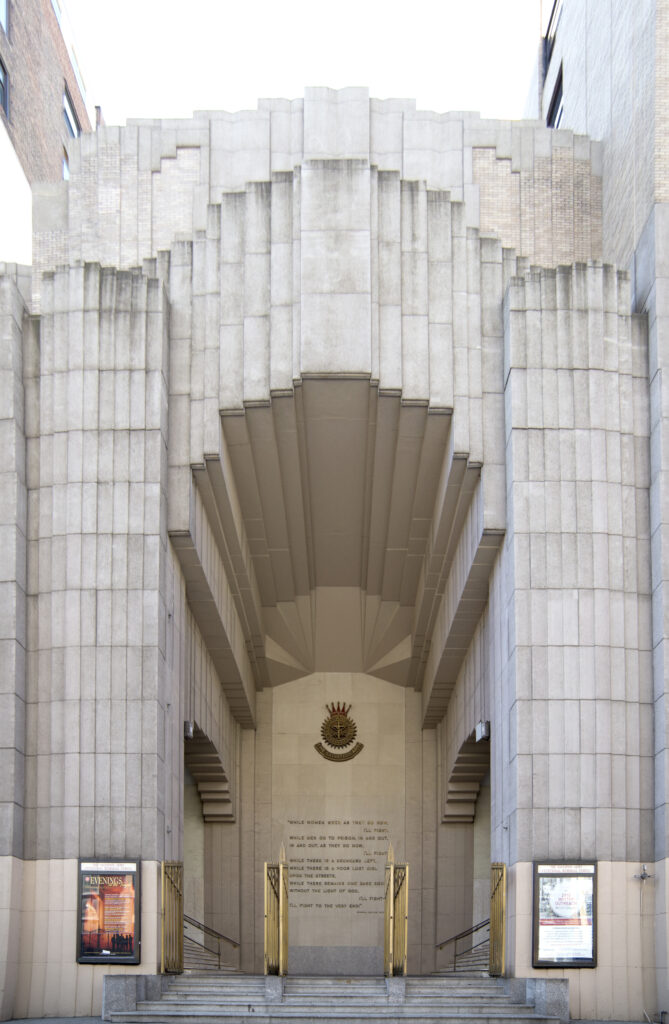
Long before my move to the United States from Canada, I remember visiting New York City as one of the millions of tourists who come each year. I was in Manhattan but had no real sense of where I was in relation to anything else. Imagine my surprise when I walked by a set of stairs leading up to a grotto-like entrance and noticed the familiar words of William Booth on the wall: “While women weep, as they do now, I’ll fight!”
“What is this place?” I wondered aloud. The impressive metal gates were closed, preventing a closer inspection. A neon sign told me this was headquarters for The Salvation Army in New York. I resolved to learn more about this incredible building.
Now having lived in New York for a decade, I’ve come to understand its importance for Salvationists in the Greater New York Division and for the entire Salvation Army community in America. Centennial Memorial Temple is one of the most historically significant buildings for Salvationists in the United States. How did it come to be?
Building a firm foundation
When The Salvation Army arrived in America in 1880, New York served as the home of its national headquarters. The fledgling movement was based out of various locations in the early years, including Brooklyn, the Financial District, and the neighborhood now known as Tribeca. In 1895, Commissioner Ballington Booth built a headquarters on West 14th Street. To honor “The Army Mother” Catherine Booth, who was promoted to Glory in 1890, it was known as Memorial Hall. Fires in 1918 and 1925 damaged the headquarters and the adjacent structure being used as an officers’ training school. Repairs were made, but it was apparent that the ever-growing Army needed a bigger base.
Enter Evangeline Booth, national commander from 1904 to 1934, who decided to erect a new headquarters on the site of the current one. Along with an administrative wing, there would be a grand meeting place for the entire Salvation Army. Ground was broken in 1929, and the new structure was completed in May of 1930. The beautiful meeting hall was dedicated as the Centennial Memorial Temple, to mark the 100th birth year of Founders William and Catherine (born in 1829).
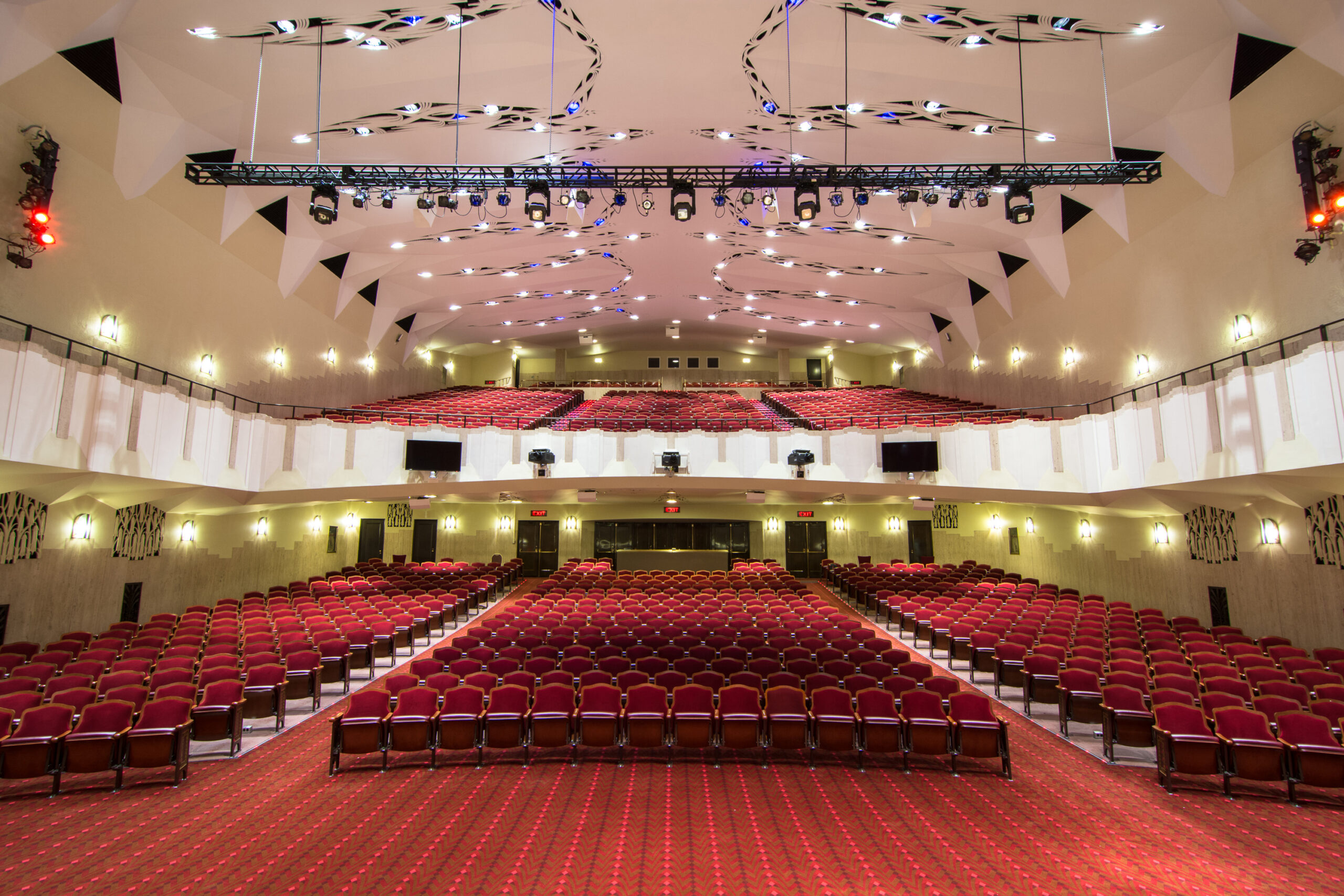
The Centennial Memorial Temple—a 1,350-seat auditorium known simply as “the Temple” or the CMT to Salvationists—was built more along the lines of Carnegie Hall than those of a church or religious building. A music-hall inspired worship space was in keeping with our history, given that William Booth would rent out theaters and dance halls to serve as early meeting spaces for Salvationists.
In style, on time
Tasked to design the project in 1928, architectural firm Voorhees, Gmelin & Walker came up with a look that was thoroughly modern for the era. The architectural style is usually described as 1920s-style art deco. Architectural historian Tom Miller in an article on the Temple noted that it has also been described as Ziggurat Moderne and Expressionist in its design.
For the last 95 years, the CMT, with its sloped floors, theater-style seating, and a simple wooden stage framed by red curtains, has been a gathering place for Salvationists. The 1930 dedication ceremony was an enormous event given the preceding tumultuous year; the CMT was being built as the international Salvation Army faced a leadership crisis and the death of General Bramwell Booth in London. The Great Depression kicked off in October of 1929, resulting in economic uncertainty for the Army here and abroad. What a triumph it was to see the building completed for the service of humanity and to the Glory of God!
All of The Salvation Army’s American commissioners were there for the grand opening. Guests in attendance included John Philip Sousa, who wrote a piece for the occasion called “The Salvation Army March.” Considered to be cutting edge both musically and technologically was the installation of an Estey electric organ that produced the same large sound quality as a traditional pipe organ. At a cost of over $22,000, it was an extraordinary investment in the musical life of The Salvation Army. Later in November 1930, well-known organist Henry F. Seibert played a recital on the new organ to a packed crowd.
More than a concert hall
The CMT became the home concert hall to the New York Staff Band. For decades the band played nearly every Friday and Sunday evening at a united Salvation Army service known as Friday/Sunday Evenings at the Temple, or FETs/SETs.
These were indeed the CMT’s glory years. Evangeline Booth performed there in her one-woman play, The Commander in Rags. Musical greats like Eric Ball and Erik Leidzén conducted bands there. Annual Good Friday services called “Three Hours at the Cross” drew generations of Salvation Army families to gather in worship. The hallowed walls hosted the funerals for some of our movement’s most significant officers. Nearly every Salvation Army general preached on the CMT stage and invited people to seek salvation and holiness at the mercy seat.
It is not an exaggeration to say that the Temple was at the very center of Salvation Army life in the United States.
Doors still open
In 1982, National Headquarters left the CMT for Verona, N.J., its penultimate move before finally settling on the cusp of D.C. in Alexandria, Va. And in 1990, the USA Eastern Territory moved from its 120 West 14th Street address to its current home in West Nyack, N.Y. Evangeline Booth’s headquarters is now the exclusive home of the Greater New York Division.
Still, the CMT is the regular meeting place for many divisional events and some territorial ones. The New York Staff Band still regularly plays on its platform, delighting audiences. As a rental to like-minded institutions, the CMT has been the home to Hillsong NYC and the late Timothy Keller’s Redeemer Presbyterian Church.
In five years, the CMT will celebrate its centennial year. How blessed we are to have this amazing place of worship to meet in as one people, united in our love for God and humanity. And while God’s mission is bigger than any one building, we believe that many people will have their faith strengthened and encouraged because of the ministry that takes place within and through the Centennial Memorial Temple.
by Rob Jeffery, director of the USA Eastern Territory’s Heritage Museum
About the Author: Guest Contributor