The Ministry in Our Hands: Black Voices of The Salvation Army
by Hugo Bravo
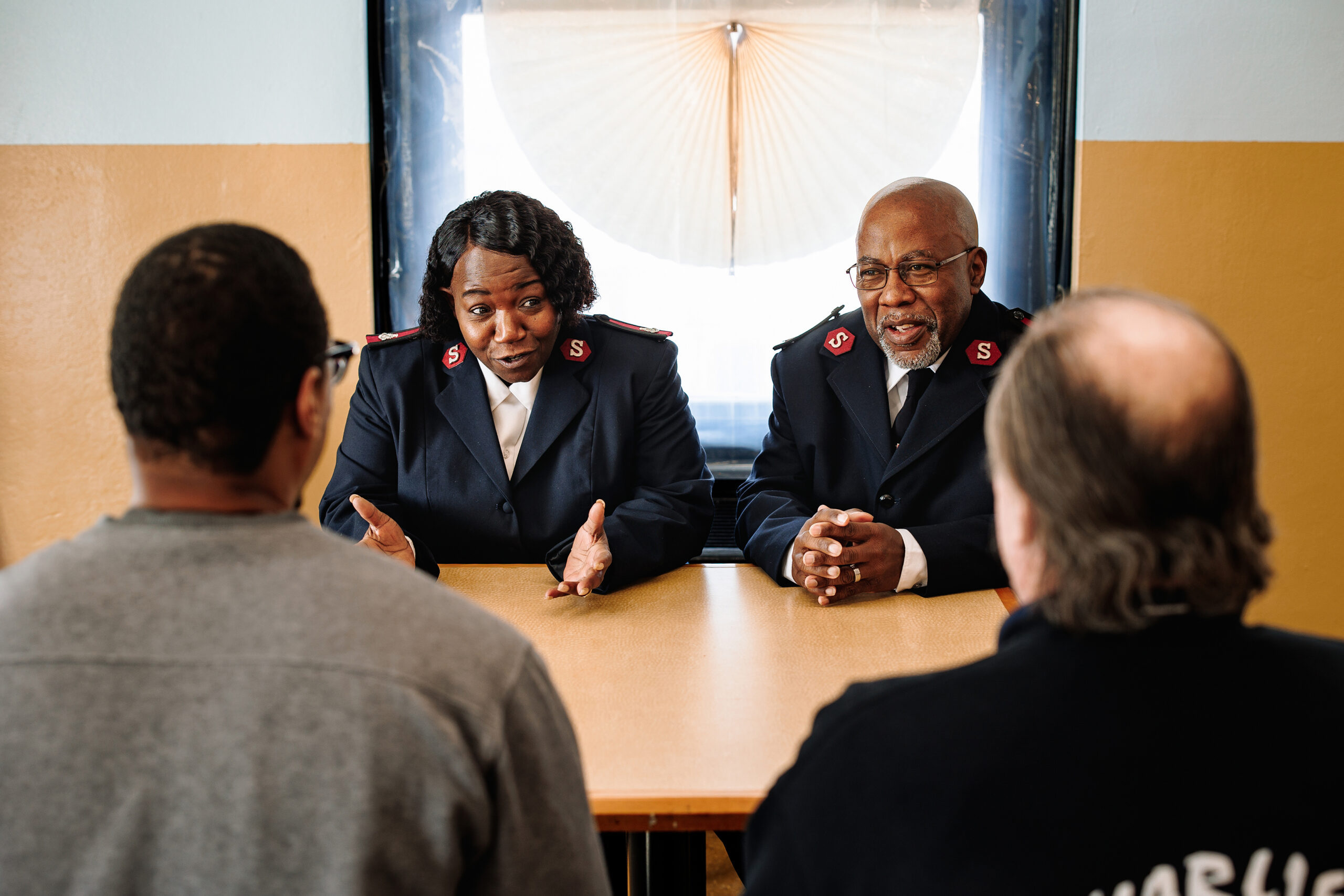
God places ministries in front of us that we may anticipate and welcome. Other times, a new way to serve might feel unexpected or even make us wonder. But no matter our level of readiness, it is God who prepares us to excel in our mission to touch the lives of others and bring souls to Him. In these interviews, African American officers, members, and employees of The Salvation Army reflect on ministries placed in their hands, and how these have impacted their own walk with the Lord.
Majors Constance and Donald Graham
Majors Constance and Donald Graham are the administrators of The Salvation Army Adult Rehabilitation Center (ARC) in Erie, Pennsylvania.
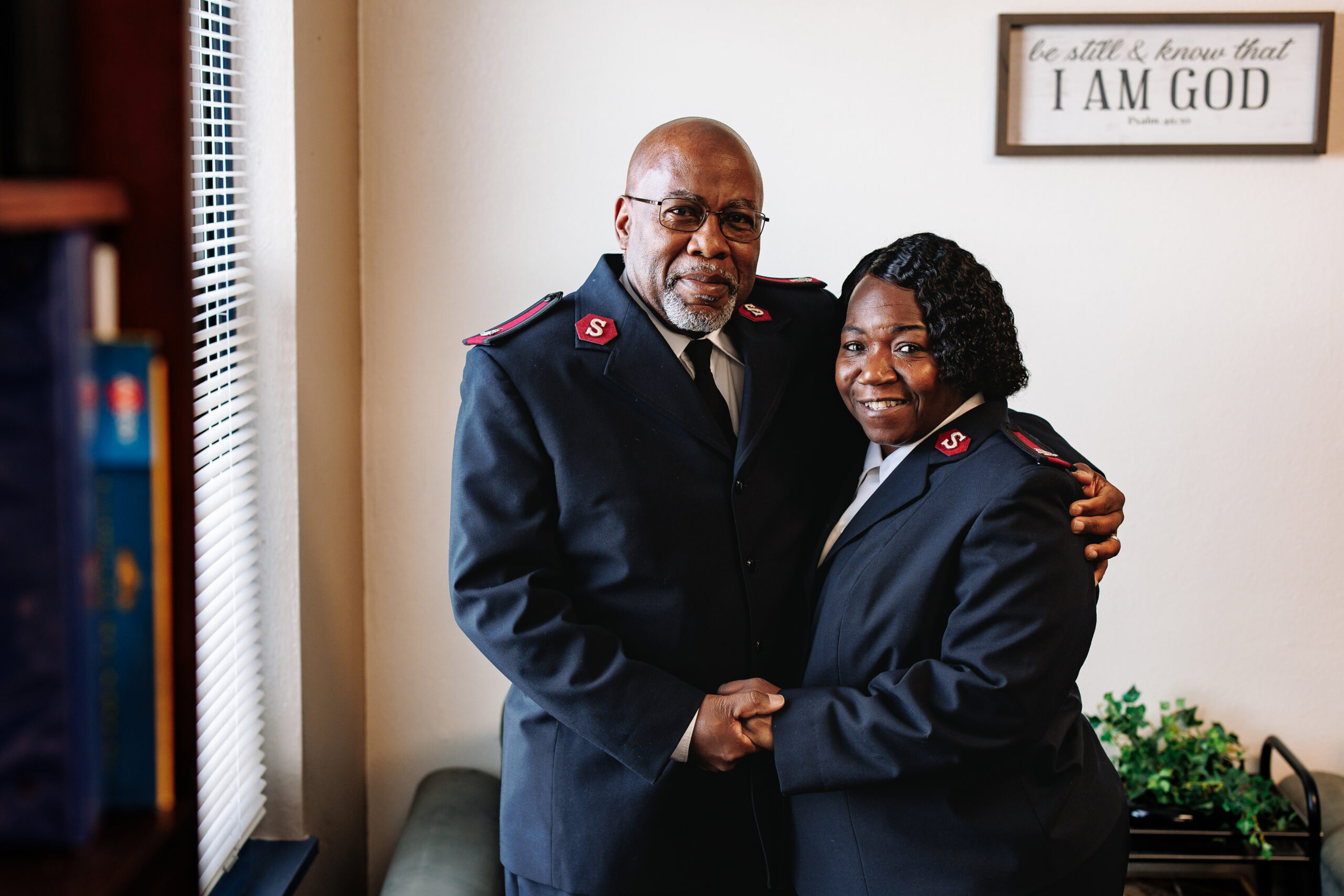
Majors Constance and Donald Graham are the administrators of The Salvation Army Adult Rehabilitation Center (ARC) in Erie, Pennsylvania. “Donald and I are so grateful to be part of the ARC ministry,” says Major Constance Graham. “We could never pay God back for what He’s done for us, but what we can do is show that same love to others as was shown to us.” (Photo/ Stacy Lynn Photography)
As beneficiaries, then employees, and now pastors of a Salvation Army ARC, Majors Constance and Donald Graham have seen all sides of the Army’s addiction recovery ministry. During their time as cadets in the College for Officer Training (CFOT), they both often mentioned how much they wanted to return to the ministry that God used to change their lives.
“Everybody said that it wouldn’t happen, because cadets very rarely serve at an ARC right out of training,” says Major Donald. “But we had such a love for the ministry that saved both our lives, and we knew what God was calling us to do.”
The Grahams have served at ARCs in the Eastern Territory for 15 years. That’s not counting the time they spent in The Salvation Army ARC of Hartford, Connecticut, where they first met as employees. After graduating the program, Donald went from being an ARC truck driver to warehouse supervisor, while serving as corps sergeant major of a nearby recovery corps in Hartford. Constance worked in the ARC’s finance department, eventually getting her counseling certification to become its women’s counselor. Now they’re at the ARC in Erie, Pennsylvania, with Major Donald on the business side and Major Constance handling the programs for the beneficiaries.
“I love interacting with donors and seeing the joy in their faces when I explain to them the work we do at the ARC,” says Major Donald.
Says Major Constance: “When our beneficiaries make better decisions, or even just small changes in their lives, it makes us grateful that God is using us to make a difference.”
No ministry remains unchanged in 15 years, and the Grahams have adapted and even learned from those they help. Major Constance remembers having to alter the use of a term in a lesson when a beneficiary pointed out that it was currently being used in drug houses to mean something else. Even hearing it was bringing up negative reminders.
“That wasn’t a term when I was dealing with addiction, but we have to make sure that the words we’re using today don’t harm or trigger our beneficiaries,” she says.
“Recovery has changed since we started our own,” says Major Donald. “The drugs are stronger, and the terms are different. But the addiction is still a symptom of a bigger issue.”
One of their most important lessons as ARC pastors is that all of life is recovery. Even someone who has never touched drugs or alcohol needs the same salvation that an ARC beneficiary does, because they both have sin in common.
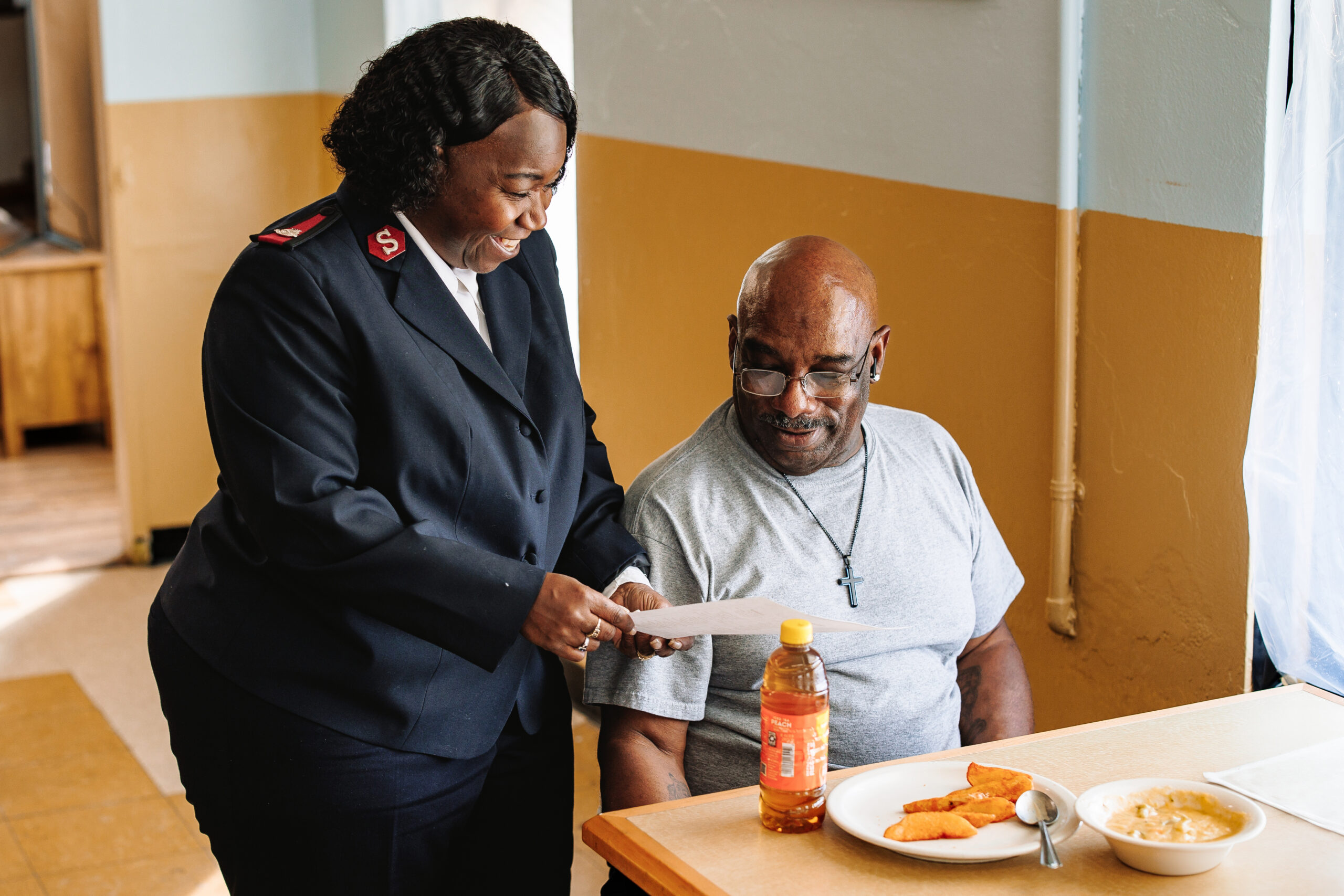
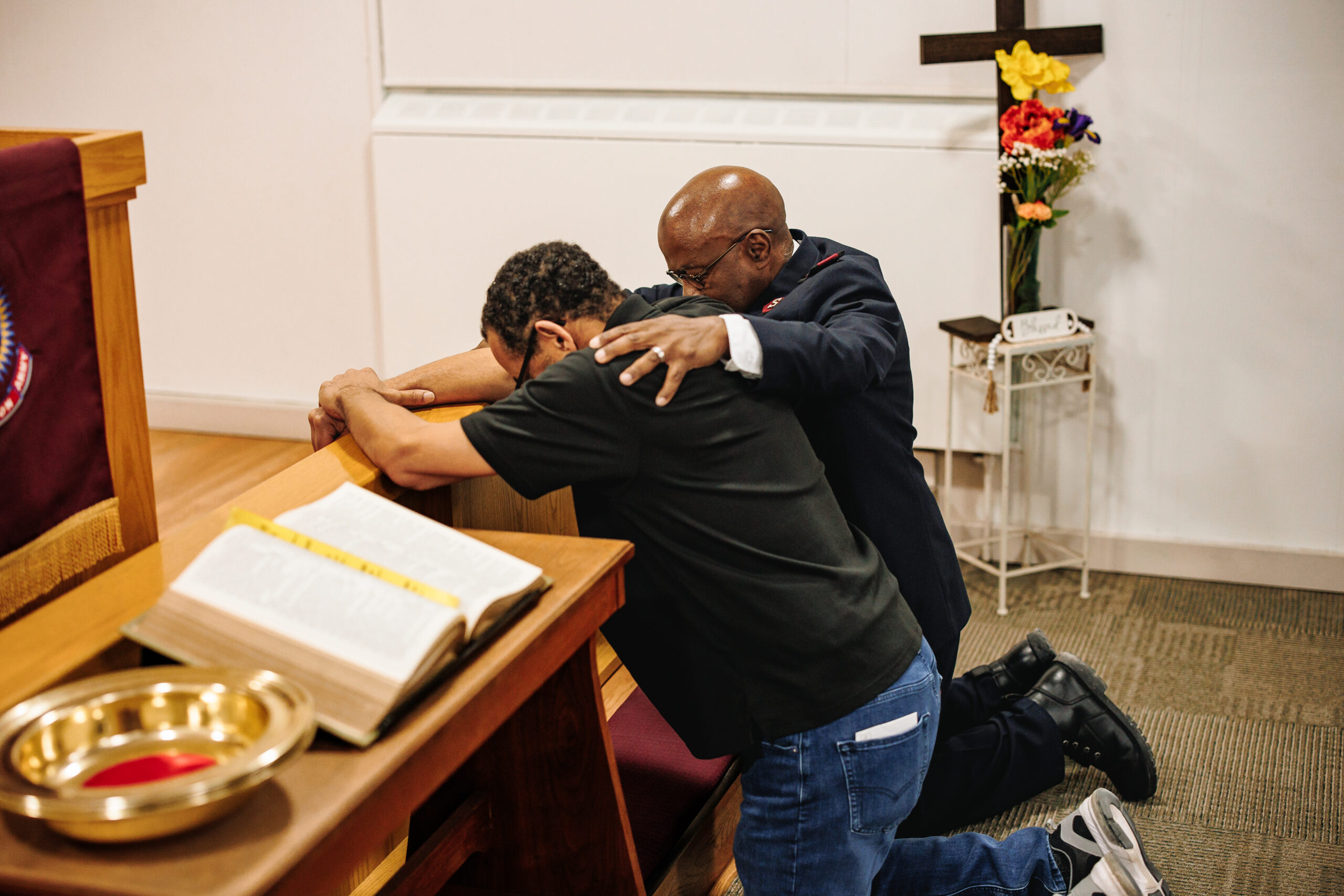
“The problems that beneficiaries come to us with can feel insurmountable,” says Major Constance. “They can’t find work, they have legal issues, they’re traumatized from terrible things that happened to them before they ever touched a drug. Many of them feel like no one has ever loved them.
“For some, the spiritual aspect of the program can sometimes be difficult to grasp, because a relationship with God wasn’t something that they’ve ever really considered.”
Their service to others is a service to God, and the Grahams keep their own connection to the Lord as strong as ever. They will be the first to admit that at times their ministry can be discouraging, but they know that if Christ can do what He did for them, He can do it for every beneficiary in an ARC too.
Tatiana Saintilus
Tatiana Saintilus is the creative arts instructor, drama specialist, for The Salvation Army Greater New York Division and teaches drama at the Westbury Corps in Westbury, New York.
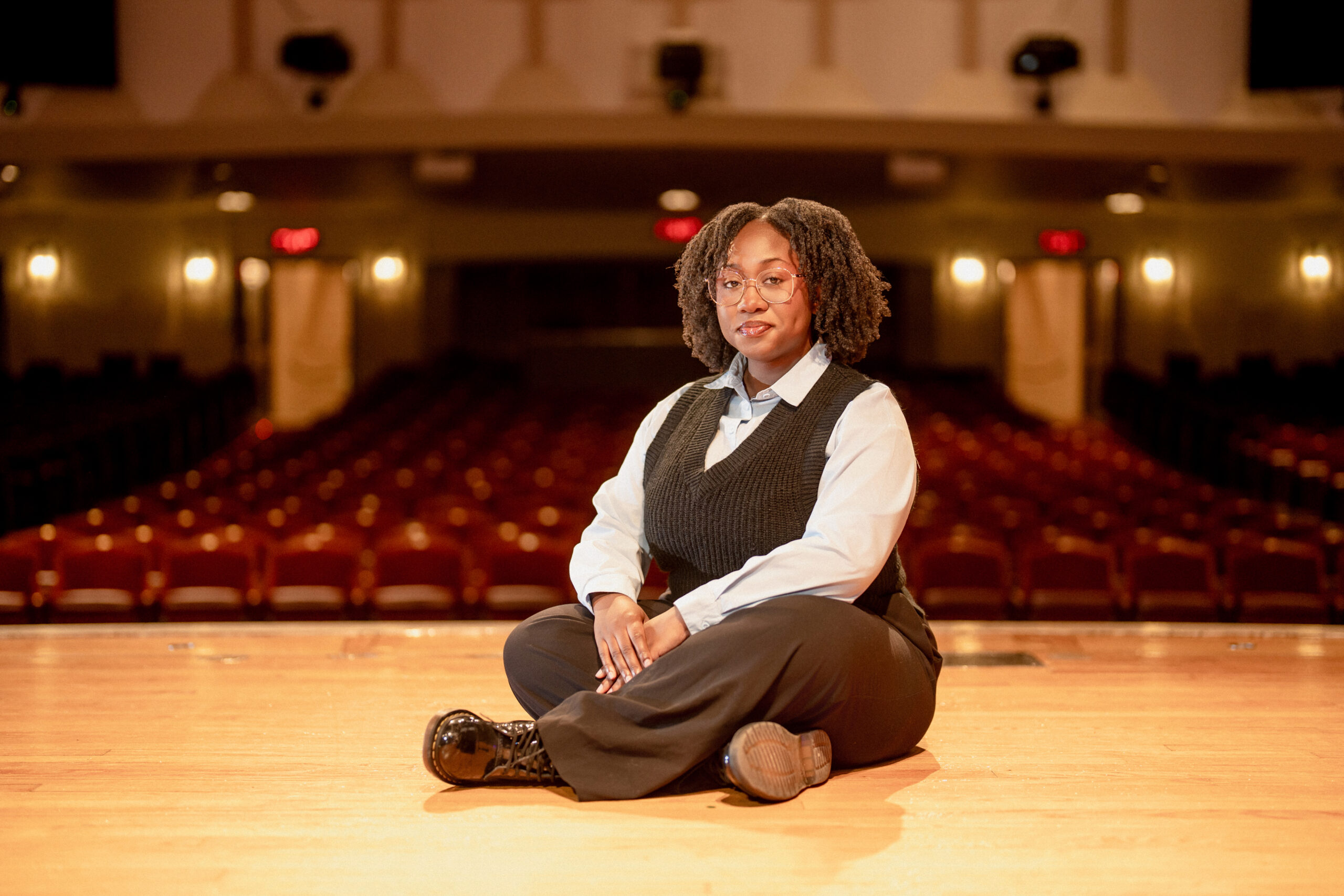
“The performance itself is the bittersweet part of drama,” says Tatiana Saintilus, an actor who is the creative arts instructor, drama specialist, for The Salvation Army Greater New York Division and teaches drama at the Westbury Corps in Westbury, New York. “My favorite part of performing is the behind-the-scenes work that the audience doesn’t see—developing the story and getting to know the characters and their world.” (Photo/Curtis Pan)
Whether it’s dance, music, or drama, The Salvation Army has always seen the arts as a ministry that can bring souls to God. But it’s more than audiences who feel the effects. The cast and crew who work and rehearse for hours to bring the arts to life are also changed through their own performances.
For Tatiana Saintilus, drama has deepened her own relationship with God.
“One of the moments when I really understood that the Lord was using me and my talents was at the Territorial Arts Ministries Conservatory,” says Saintilus, an actor. “My instructor and I were doing a piece on the topic of blasphemy. In the story, there was a preacher who spoke words that were not faithful to God’s true words.
“That’s where it clicked for me. What we do and say on stage is impactful. But for someone to take the message with them, first I need to believe in what I’m doing and saying on stage.”
That confidence, she says, is key. Even a great actor who takes direction well will struggle in their performance without their own confidence.
“At the Westbury Corps, my role is to help instill that confidence in the young actors of our drama ministry,” she says. “One of the children I work with in Westbury has natural talent, but she is too hard on herself. She had to learn that drama is not necessarily about perfection. It’s more about allowing yourself to be free and to play in your role.”
Saintilus recently witnessed the student go on stage for the first time in front of an audience. “It was the coolest thing to see her with that confidence on stage,” she says.
To help Saintilus believe in her art (and help others believe in theirs), she refers to Hebrews 13:6: “So we say with confidence, ‘The Lord is my helper; I will not be afraid. What can mere mortals do to me?’”
“That verse helps me when I feel unsure, even when I know that I’m sure of the material. It reminds me of why and who I’m doing this for,” says Saintilus. “I know that whoever is meant to be touched by our stage will be touched. What they’re meant to take away from the performance is in God’s hands.”
Major Celestin Nkounkou
Major Celestin Nkounkou is the corps officer of The Salvation Army Troy Temple Corps in Troy, New York.
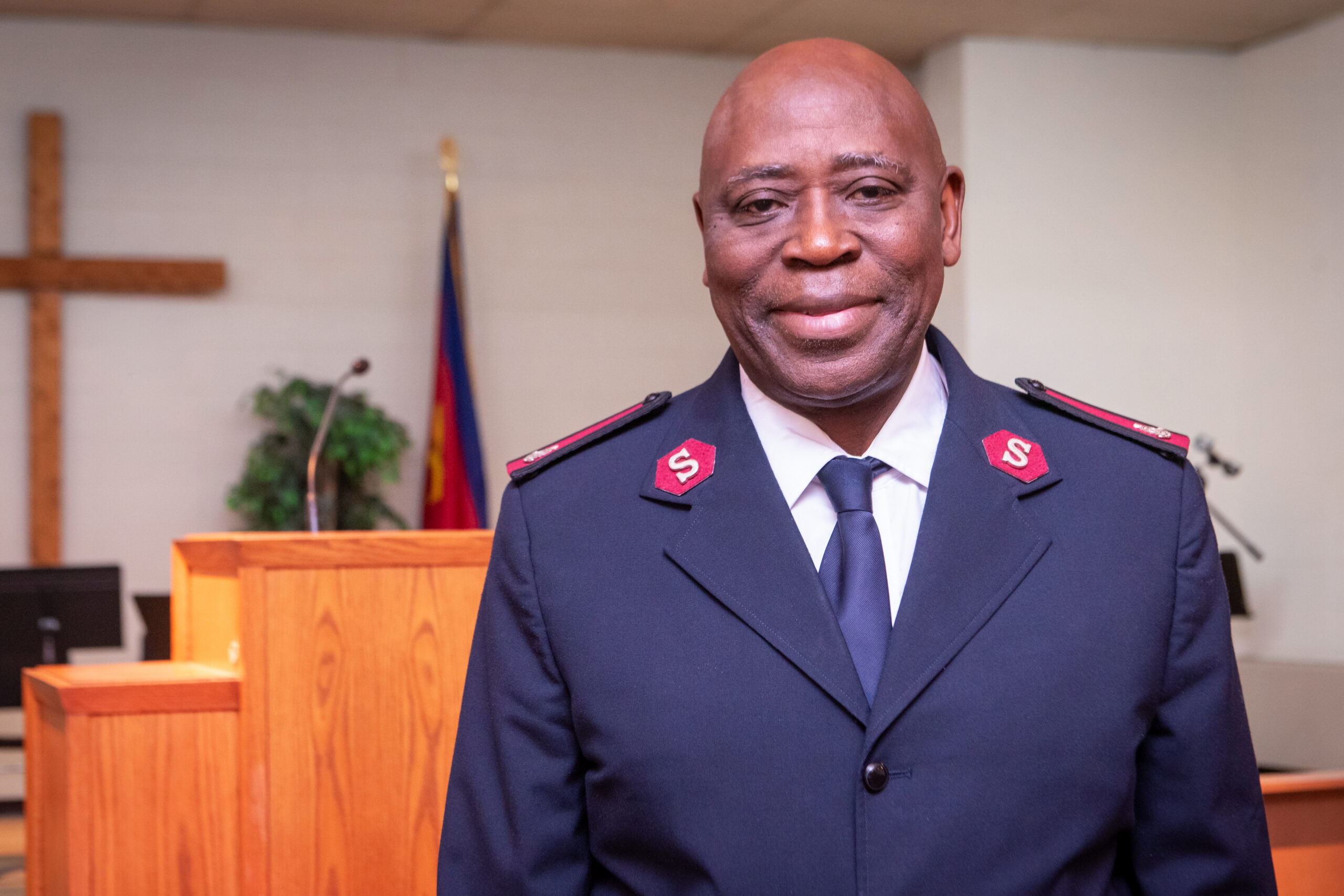
Major Celestin Nkounkou welcomes all families to The Salvation Army in Troy, New York, where he and his wife, Major Stefanie Nkounkou (not shown), are the pastors. (Photo/Studio Lana)
“Finally, brothers and sisters, whatever is true, whatever is noble, whatever is right, whatever is pure, whatever is lovely, whatever is admirable—if anything is excellent or praiseworthy—think about such things. Whatever you have learned or received or heard from me, or seen in me—put it into practice. And the God of peace will be with you.” —Philippians 4:8–9
“That verse is important to me,” says Major Celestin Nkounkou. “It was the verse that my father read to my mother before he passed away.”
Years later, Philippians 4:8–9 would also help guide Nkounkou through an unexpected ministry. When he and his wife, Major Stefanie Nkounkou, arrived at Troy, they saw a lack of community involvement in corps programs.
“On Sundays, kids would run around in church,” he says. “They weren’t getting a Christian education.”
The pastors learned that many of the children coming on Sundays had special needs. Several of them also came from single-parent households.
“During our first year, we took kids to camp for three different sessions. In each of the sessions, at least one child from Troy was removed for behavioral problems. That broke my heart,” says Nkounkou. “But I always believe that God sends us to where we are for a reason. We realized that it was up to us to bring these children to the Kingdom of God.”
Routine is something that all kids, special needs or not, can benefit from, and Nkounkou incorporated a basic routine every Sunday for all the children and their families.
“Everyone learned the praise song ‘Build Your Kingdom Here,’” he says. “That song was a prayer from all of us. I personally cried out to the Lord, telling Him that we are a church filled with children that love Him, and families who saw the Army as a positive presence in their lives.”
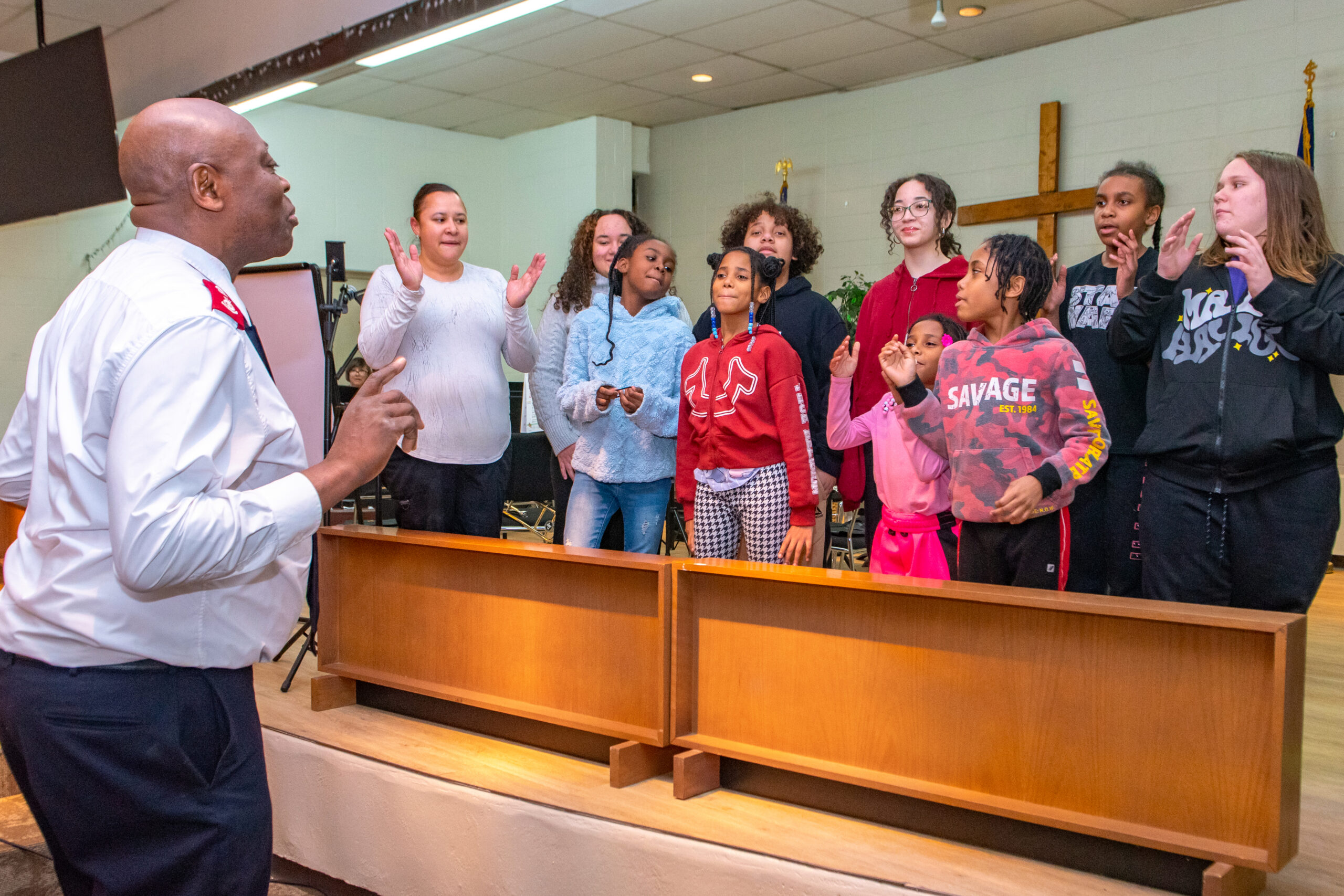
“With love and persistence, we’ve encouraged our children and involved them in ministry,” says Major Celestin Nkounkou, pastor of the Troy Temple Corps in Troy, New York. “Working with children—some who have special needs—is not easy. But it’s amazing that right now, we’re preparing musicals to do with these kids.” (Photo/Studio Lana)
Ministry for these children would require a different process, especially if they were to become part of the corps’ music and worship programs.
“We found the right level of correction and discipline to teach music,” says Nkounkou. “The students saw that they had to pay attention for the benefits of learning their instrument.”
One girl from Troy, who was scared to speak in public at first, had a breakthrough during a Sunday service. Though she did not have any learning disabilities, Nkounkou noticed how shy and reserved she was among her peers.
“Some children struggle to be in the front and prefer to quietly stay in the background,” he says. “But when that girl went up in front of everyone on Sunday, she thanked God for bringing her to our church. That’s when we knew something good and positive was at work here.”
Four words guide him when working with the children at Troy: faith, love, joy, and compassion.
“First, I need faith to know that God will make a change in a child’s life. Then, it’s up to me to show that child the love of God—to bombard them with it, even if it is difficult or met with disrespect,” he says.
“The process is hard, and it can feel like it’s dragging me down personally. That’s why I need joy from the Lord to give me strength and keep me positive. And now, it’s about compassion. I understand that a child with special needs is not going to learn the same way or at the same speed as other children. But because of the witness of the children through events like Troy’s Christmas musical, we’ve seen new families showing interest in God’s ministry through The Salvation Army.”
And of course, Nkounkou still refers to Philippians 4:8–9. He sees the pure, lovely, and admirable in a child advancing in his music lessons or addressing the congregation on Sunday. That’s when it’s clear that the Kingdom of God is being built in Troy.
Envoy Ariké Mason
Envoy Ariké Mason is the corps assistant and pastor of the Brooklyn Bedford Temple Corps in Brooklyn, New York. She also serves as divisional statistician and data analyst for the Greater New York Division.
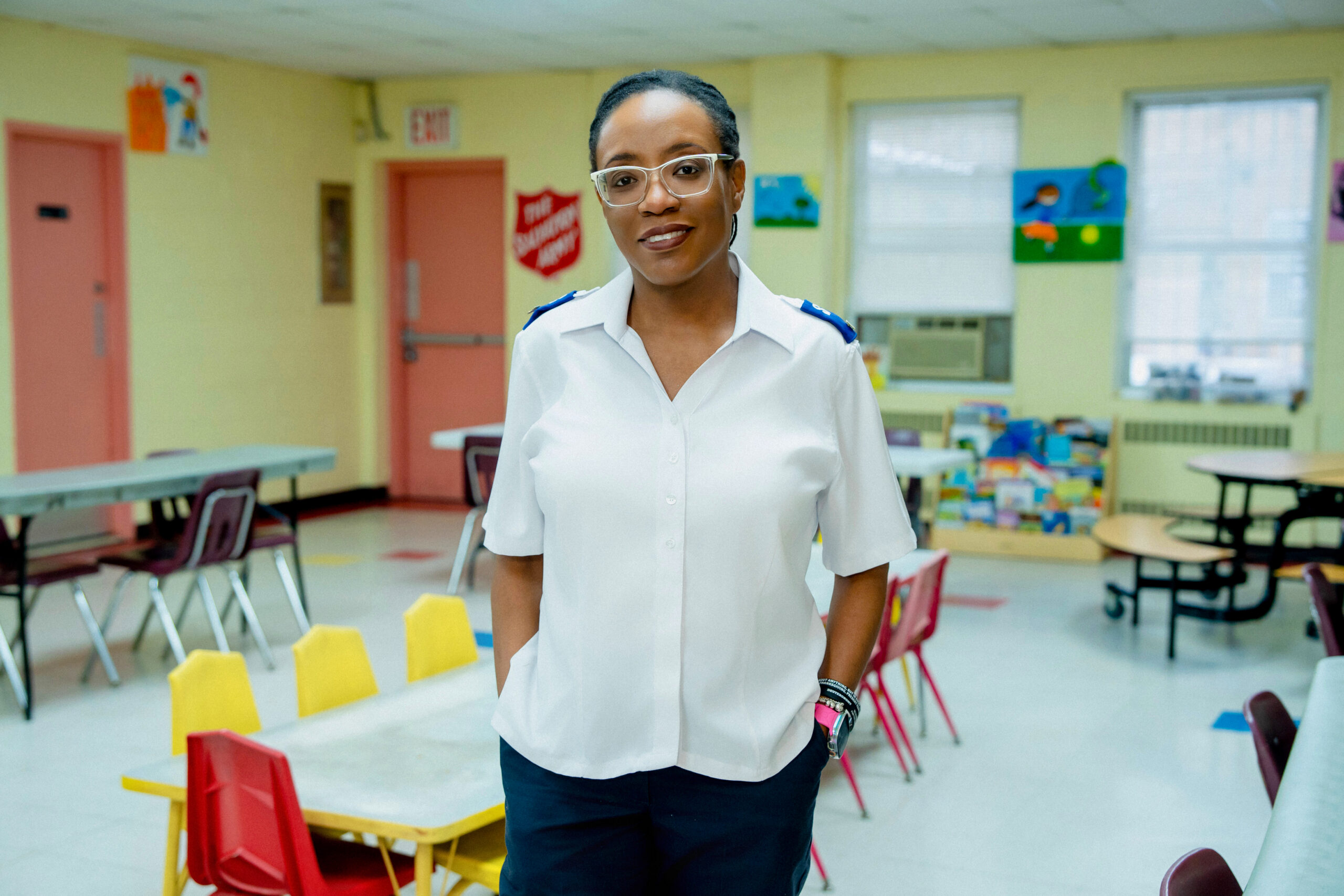
“As pastors, we can sometimes feel like we are it, the head of everything in our church,” says Envoy Ariké Mason, the corps assistant and pastor of the Brooklyn Bedford Temple Corps in Brooklyn, New York. “But we are nothing without the people who serve alongside us, or the people that we serve. You cannot be a leader if you don’t have followers. You can’t be a shepherd if you don’t have a flock.” (Photo/Curtis Pan)
Ariké Mason knew she wanted to work with young people in ministry, even when she was a young person herself.
“I have a knack for working with kids, but teenagers are my favorite ones to minister to,” says Mason. “Everyone is so scared of them, but to me, they’re all just misunderstood. They’re confused.” She thinks of them sort of like hilarious adults trapped inside kids’ bodies.
Mason’s first job was as a dining room hostess at Camp Echo Grove, the Salvation Army summer camp in Michigan. But some of her best memories of her work with young people involve driving them home from the corps. She could listen to them and process all the information.
“I really learned what was going on in their lives, both good and bad,” she says.
As a millennial pastor, Mason believes that having good relationships between the youngest and the oldest members of a corps has a positive effect on ministry. But for those to develop, both generations need to see and understand their differences. One big difference is how younger people tend to move or not commit to one place or job for a long time, whereas baby boomers may choose to stay in one home or location for years, even decades.


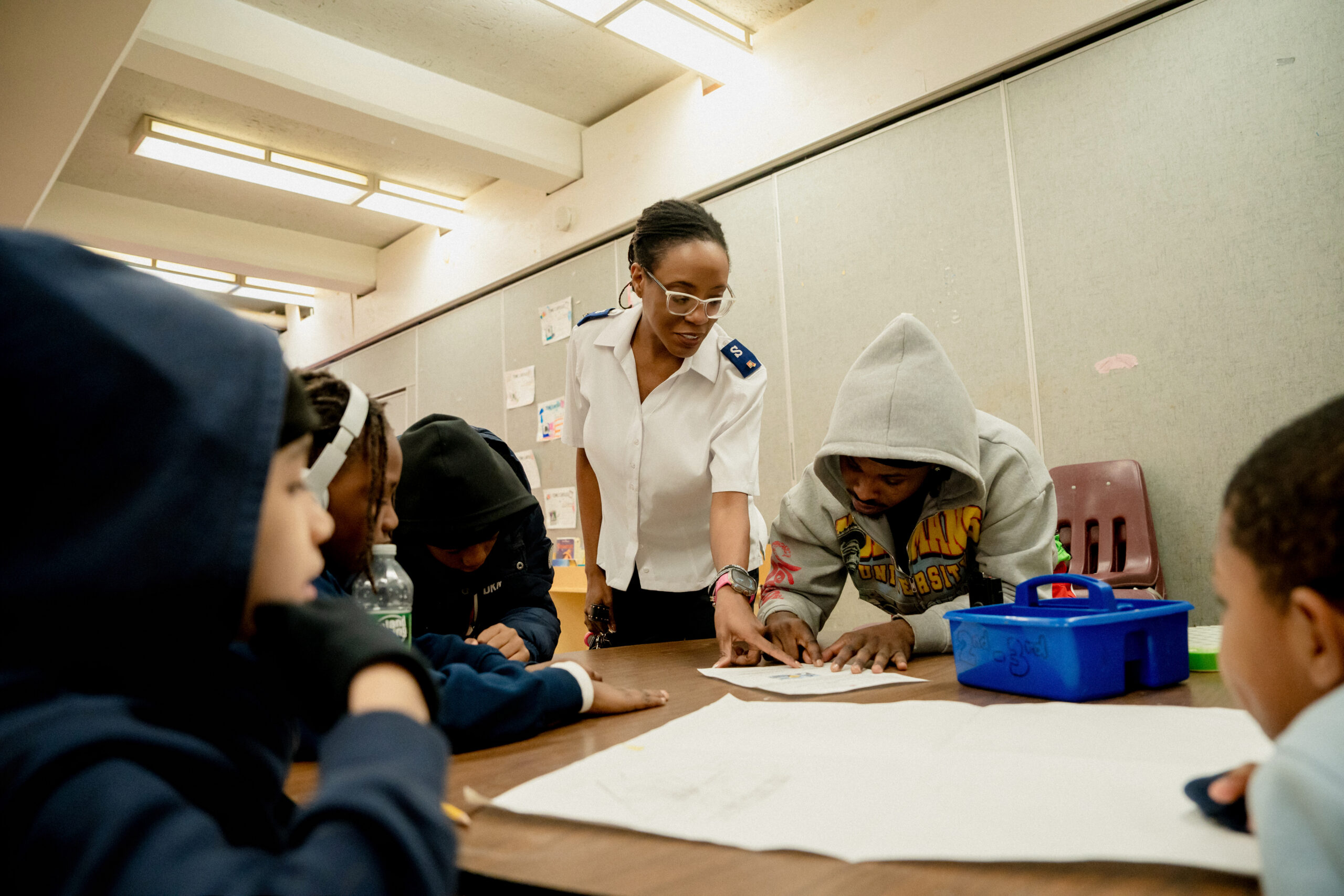
Envoy Ariké Mason thrives working in ministry for young people at the Brooklyn Bedford Temple Corps in Brooklyn, New York. (Photos/Curtis Pan)
“Some say that young people are backsliding in ministry. I don’t think they are. I think young people are moving on to different ministries based on their own needs,” explains Mason. “That doesn’t mean we stop teaching the Word of God or creating His disciples. But the world is changing, so it’s up to us pastors to change how we do ministry.”
For an example of a pastor who knew what it took to minister to a younger, changing generation, we only need to look at Jesus Christ Himself.
“Jesus was both of His time and ahead of the times,” says Mason. “Even when He was resting, He never turned away the children. His apostles were all young men in their teens and 20s. Jesus prepared these men of high school and college age for ministry. And I want to prepare my youth for ministry too.”
The teens at Brooklyn Bedford Temple have shown an eagerness for the gospel.
“They’re so hungry for learning and ministry that they want steak all the time. I want to give them filet mignon,” says Mason. She’s even introduced them to Nehemiah, considered to be one of the most complex books in the Bible because of its detailed layers, timeline, and moral issues.
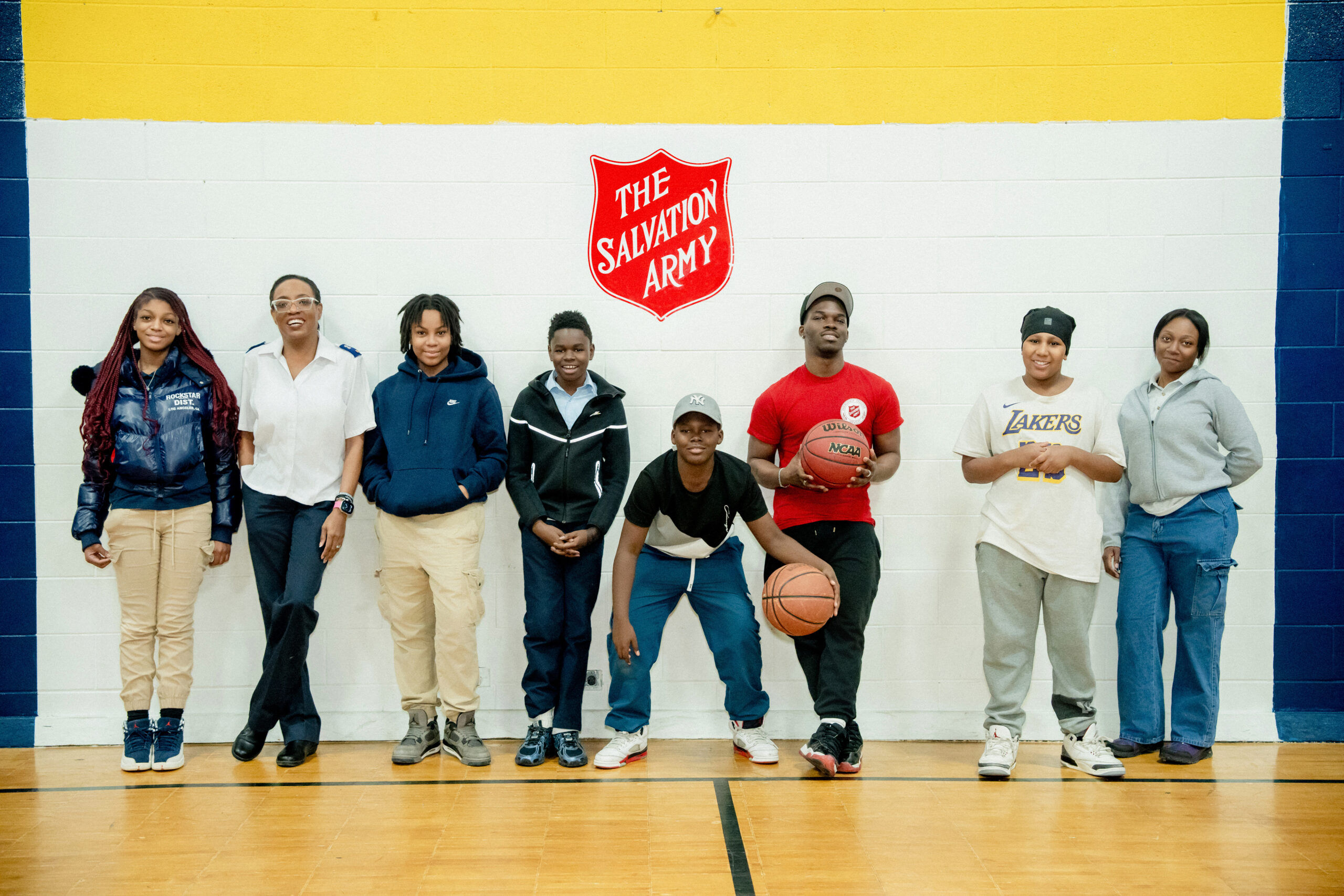
Youth at the Brooklyn Bedford Temple Corps are prepared to take on roles in ministry, thanks to Envoy Ariké Mason (second from left). She says they are “hungry for learning and ministry.” (Photo/Curtis Pan)
“When ministering to young people, your own prayer life must be strong,” she says. “They can tell when you’re not being real with them, and with yourself. That encourages me to be deeper in God’s Word myself, because I can’t teach them if I’m not in check spiritually. Young people can see fakeness.”
Young people can also see when they need to step up for others. Last year, Mason had to take some time off when her father passed away. During that painful time, the Bedford Temple teens made sure that she knew she was in their prayers, calling her, sending texts, and holding her up with their ministry through her hardest moments.
“I have been shown the love of Christ by so many people in my life, within The Salvation Army and outside of it. These are people who openly love Jesus and showed me that you can be young, different, or special, and still serve the Kingdom of God. It’s only fair that I pass this lesson on to others too.”
Baron Whitfield
Baron Whitfield is the director of operations for Star Lake Camp and Conference Center in Bloomingdale, New Jersey.
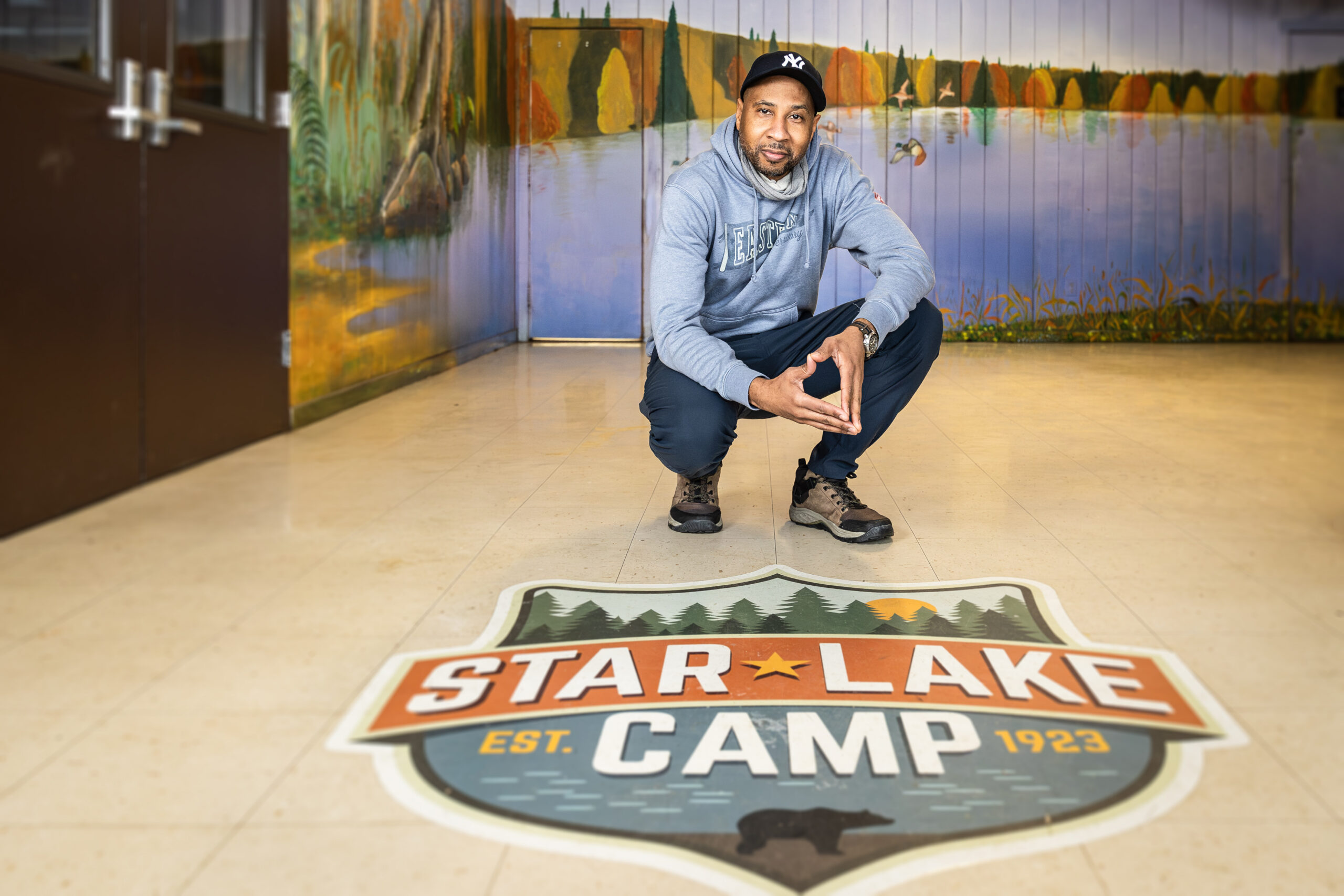
“Thousands of people have memories of their time at camp, and not just the kids who attend,” says Baron Whitfield, director of operations for Star Lake Camp and Conference Center in Bloomingdale, New Jersey. “It’s also their families, senior citizens who come for events, and Salvation Army corps officers who’ve served there. Last year, we had a young lady celebrate her engagement at Star Lake because camp had left such an impact on her.” (Photo/Lu Lu Rivera)
In 1992, college student Baron Whitfield, not wanting to spend his vacation months at home, applied to work at a summer camp.
During the job interview, it was casually mentioned that campers were no longer allowed to throw rocks at the “Jolly Green Giant.” Memories from his childhood flooded Whitfield. He’d spent two summers at a camp with a large water tank nicknamed the Jolly Green Giant.
“Those rocks would chip the tank’s green paint,” says Whitfield. “That’s when I remembered singing ‘Boom Chicka Boom,’ visiting the tabernacle, eating Oreo cookies outside, and my old shirt with the words ‘Star Lake’ on it. I could not believe that I was going back to the same camp that I had been to as a kid myself!”
For the next six summers, Whitfield worked at Star Lake. In 1998, he accepted a position at The Salvation Army Divisional Headquarters in New York as the assistant camp bureau registrar. He saw the other side of camp ministry, speaking to the parents and helping them fill out the forms needed for their children to enjoy a summer with The Salvation Army.
Whitfield was part of The Salvation Army until 2021, advancing to assistant camp director before leaving to pursue his master’s degree in education and become a special education teacher. In education, he wanted to make an impact on the lives of young people, especially those affected by the COVID-19 pandemic. The world was changing, but to Whitfield, it was important to show children that they were still accepted and loved just as they were.
“God was moving amazingly in that time,” says Whitfield. He was forming connections with other believers in the Department of Education (DOE) while being an advocate for the children he was teaching.
“I wanted to be there for the culture,” he says. “There weren’t many Black male representatives in the DOE. And it’s important that children see people who look like them in leadership roles, in school or at summer camp.”
During his time as an educator, Whitfield kept in touch with the Army in Greater New York and knew that they were looking for someone to fill his old role. He agreed to be a consultant for new camp staff. His son Noble also worked at Star Lake as a counselor.
“When I drove him to camp, I dropped him off far away from the front door,” remembers Whitfield. “I didn’t want anyone to think I was coming back or that I wanted things to be run my way.”
But when Noble told his father that Star Lake was still following the programs and lessons that began under him, he started to consider a full-time return.
“I had not realized the impact I’d made at Star Lake, and the DOE had become a challenge. If I stayed, it would have taken me about 10 years to make the impact I wanted to make. When I told people at my school that I was returning to The Salvation Army, they all said the same thing: ‘You must really love this camp.’”
Going back to camp was a faith move, says Whitfield, and he took the jump. In his current role as director of operations, he oversees the budgets, finances, and maintenance of Star Lake. His decisions impact the ministry. After his time in the education system, Whitfield returned with a new understanding of what God’s love means to young people.
“I think about how Christ showed love through His compassion, and how welcoming He was towards others, especially children. When they come to camp, children are looking for a sanctuary, and that’s what I want to give them.”
Valarie D. Coleman
Valarie D. Coleman is the housing coordinator for the LIGHT Project (Leading Individuals Gracefully out of Human Trafficking) for The Salvation Army of Western Pennsylvania.

“When I used to work at the local jail with prisoners, people would ask how I could do what I do and still stay so happy and sparkly on the outside,” says Valarie Coleman, housing coordinator for the LIGHT Project for The Salvation Army of Western Pennsylvania. “I would respond, ‘It’s a good thing that God looks at the inner, while man looks at the outer.’” (Photo/Anytime Pictures)
Valarie Coleman knows the spaces where she can be open about her work with the LIGHT Project, The Salvation Army’s Pittsburgh-based outreach to survivors of labor and sex trafficking.
When people ask about what she does, Coleman says, “I start by saying that I work with The Salvation Army. If they press the issue, I simply say that I work with victims. When the time is right, I mention trafficking.”
It can take a few moments for them to believe her.
“Sometimes when you talk about the Army and helping others, you get the ‘aww’ response, almost like they’re hearing sad violins in the background as you talk. But when they learn that you’re helping survivors, or people going through drug and alcohol addiction, it makes others want to get involved.
“It’s like you have street cred in the eyes of survivors. From your peers, it’s a deeper form of respect.”
But Coleman’s role as housing coordinator is to get survivors off the streets and into stable living arrangements. Credibility comes from showing every client how to be self-sufficient after years of living under their trafficker’s watch.
Many survivors lack knowledge about resources. In one case, a woman had been picked up and trafficked outside a nightclub at 15 years old. By the time she received help, she was 28 years old. She had never even been allowed to have a phone.
“For some, we need to start with the complete basics,” says Coleman. “Sometimes, people in social services want to gatekeep information from the people they are supposed to be helping. I want the people I help to learn how to get what they need and have access to all the resources I know. Hopefully, it can prevent them from being entangled in any type of toxic relationships for anything.”
Getting someone into their own living quarters takes openness and preparation from both the client and Coleman. Coleman approaches apartment hunting much like anyone looking for a home would; the only difference is that she mentions that she’s advocating for someone from The Salvation Army.
“Sometimes clients feel the need to overexplain to a landlord about their situation,” she says. “I help them approach this like any other person looking for a home. You don’t have to share with the landlord what happened when you were 14.
“Instead, let me know if there’s anything in your record or credit that could keep you from getting this apartment, so we can work from there together.”
For many of these survivors, being dishonest to get what they need has become part of their life. Coleman understands that. But just as she helps clients avoid preconceived judgments from landlords, Coleman approaches every case without any judgment as well. She treats everyone she helps like family.
“Matthew 6:33 says to seek first His kingdom and His righteousness, and all these things will be given to you as well. Whether I’m around saints or sinners, my feelings don’t matter. I see God in every situation,” says Coleman. “If I can do that, then I don’t judge. He will take care of the rest.”
It also reminds Coleman that the outcome for every person she helps is in God’s hands, even if they choose to go back to their previous life.
“I don’t see it as time lost trying to help this person,” she says. “I see it as the enemy being more embedded in this person’s situation than we all realized. It’s not my business to know the ‘why’ or ‘why not.’ It’s my business to do right in the place where God has put me.”
About the Author: Hugo Bravo